This list highlights some of the most visually stunning and artistically significant flags from around the world. These flags are celebrated for their vibrant colors, unique designs, and symbolic meanings that represent nations and cultures with beauty and pride.

1.Brazilian Flag15767 votes
The Brazilian flag features a green field with a yellow diamond and a blue celestial globe with stars arranged in the pattern of the night sky over Rio de Janeiro. Its vibrant colors and intricate symbolism reflect Brazil's lush landscape and rich cultural heritage.

2.South Korean Flag12498 votes
The South Korean flag, known as Taegeukgi, features a white background with a central red and blue Taegeuk symbol, flanked by four black trigrams. Its simple yet elegant design represents balance, harmony, and the principles of Eastern philosophy.

3.United States Flag11998 votes
The flag of the United States features thirteen horizontal stripes representing the original colonies and fifty stars symbolizing the fifty states. It is recognized worldwide as a symbol of freedom and democracy.
💡 First officially adopted in 1960 after Hawaii became the 50th state.

4.Chinese Flag10543 votes
The national flag of China features a large star with four smaller stars in a semicircle set off towards the fly side. It symbolizes the unity of the Chinese people under the leadership of the Communist Party.
💡 Adopted in 1949, it is also known as the 'five-star red flag'.
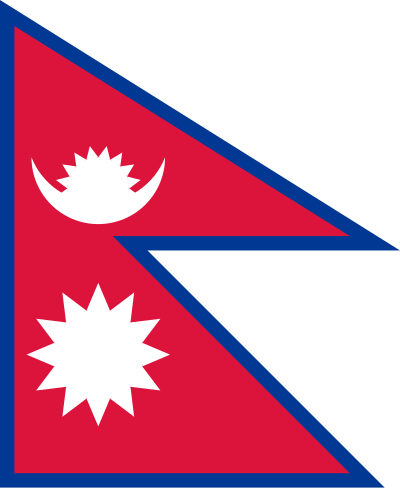
5.Nepalese Flag10371 votes
Unique among national flags for its non-rectangular shape, the Nepalese flag consists of two overlapping crimson-red triangles with white symbols of the moon and sun. Its distinctive design symbolizes the Himalayas and the country's rich cultural and spiritual history.

6.Mexican Flag9246 votes
The flag of Mexico features three vertical stripes of green, white, and red, with the national coat of arms depicting an eagle eating a serpent on a cactus in the center. It represents independence and the Aztec heritage.
💡 The colors’ meanings have evolved over time, now often representing hope, purity, and sovereignty.

7.French Flag8923 votes
Known as the Tricolour, the French flag features three vertical stripes of blue, white, and red. It symbolizes liberty, equality, and fraternity during the French Revolution.
💡 It inspired many other national flags and is a symbol of revolutionary ideals worldwide.

8.Australian Flag7877 votes
The Australian flag includes the Union Jack, a Commonwealth Star below it, and five stars of the Southern Cross constellation. It signifies Australia's history, geography, and its ties to Britain.
💡 The Commonwealth Star has seven points representing the states and territories.
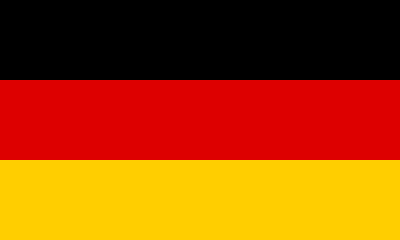
9.German Flag6771 votes
The flag of Germany consists of three horizontal bands of black, red, and gold. It symbolizes unity and freedom, with a history rooted in the 19th-century movement for democracy.
💡 The colors are derived from the Lützow Free Corps during the Napoleonic Wars.
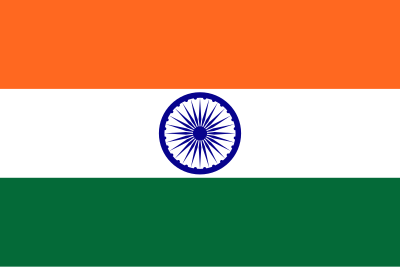
10.Indian Flag4883 votes
The flag of India, called the Tiranga, consists of three horizontal stripes of saffron, white, and green, with a navy blue Ashoka Chakra in the center. It symbolizes courage, peace, and faith.
💡 It became the official flag of India in 1947 upon independence from British rule.
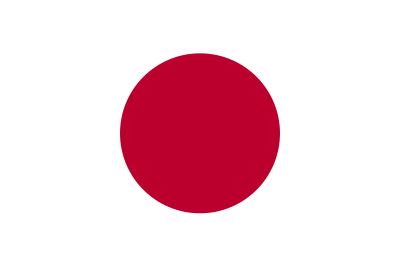
11.Japanese Flag3723 votes
The flag of Japan, known as the Nisshoki or Hinomaru, features a red circle symbolizing the sun on a white background. It is one of the oldest national flags, representing Japan's identity and culture.
💡 The flag's design has been officially used since 1870 and was adopted as the national flag in 1999.

12.Canadian Flag3385 votes
Known as the Maple Leaf, the flag of Canada features a stylized red maple leaf in its center on a white background, flanked by two red borders. It symbolizes Canada’s nature, heritage, and pride.
💡 It was inaugurated as the national flag on February 15, 1965, a day now celebrated as National Flag of Canada Day.

13.South African Flag2918 votes
The flag of South Africa features a unique design with multiple colors, including black, green, yellow, white, red, and blue. It symbolizes the unity of the diverse nation and its history.
💡 Adopted in 1994, it was designed to reflect the country's transition to democracy and mutual respect.


