This list compiles some of the most common and insightful questions asked during Google interviews, spanning technical, coding, and behavioral categories. The selection also includes some lesser-known probing questions designed to assess problem-solving skills and lateral thinking, providing comprehensive preparation tips for aspirants seeking roles at Google.
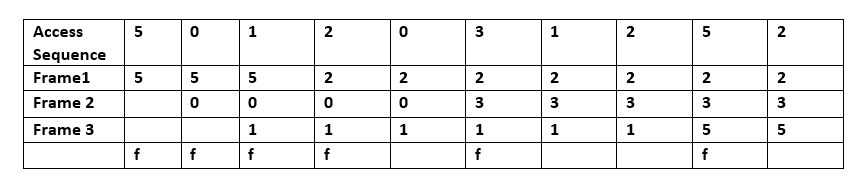
1.Implement LRU Cache11676 votes
Design and implement a data structure for a Least Recently Used (LRU) Cache that supports get and put operations in constant time. This question assesses understanding of data structures like hash maps and doubly linked lists.
💡 This problem is a classic example of combining multiple data structures to meet performance constraints.

2.Serialize and Deserialize Binary Tree10292 votes
Explain how you would convert a binary tree into a string representation and then reconstruct the tree from this string. This challenge examines knowledge of tree traversal and encoding techniques.
💡 Commonly uses level-order traversal (BFS) with null indicators to preserve tree structure during serialization.

3.Implement a Median Finder9271 votes
Design a data structure that supports adding numbers and finding the median efficiently at any point. This problem tests knowledge of heaps and data stream algorithms.
💡 A common interview question for testing understanding of balanced data structures and real-time statistics.

4.Find the Duplicate8429 votes
Given an array of integers, identify any duplicate number in the array. This problem tests the ability to efficiently detect repetitions within data sets.
💡 Uses Floyd's Tortoise and Hare cycle detection algorithm to find the duplicate efficiently.

5.Evaluate Reverse Polish Notation7331 votes
Implement an interpreter to evaluate expressions in Reverse Polish Notation. This tests stack data structure knowledge and expression parsing skills.
💡 Reverse Polish Notation is used in some calculators and expression evaluators for its simplicity in parsing.

6.Black Box Testing7211 votes
Black box testing involves testing software without any knowledge of the internal code structure. It focuses on input-output analysis to identify discrepancies and bugs.
💡 The term originated in the 1950s and is fundamental in software quality assurance, emphasizing user experience over internal mechanics.

7.Find All Anagrams in a String7209 votes
Given a string and a pattern, find all start indices of the pattern's anagrams in the string. This problem emphasizes sliding window techniques and character frequency analysis.
💡 This problem is often used to test understanding of anagram properties and efficient substring search algorithms.

8.Implement a Trie (Prefix Tree)6758 votes
Design and implement a Trie data structure to store a dynamic set of strings, supporting insert, search, and prefix matching operations efficiently. Tries are fundamental in autocomplete and dictionary applications.
💡 A Trie can be optimized with compressed nodes or suffix links for advanced applications like word search puzzles.

9.Find the Missing Number in Arithmetic Progression5755 votes
Given an array representing an arithmetic progression with one element missing or corrupted, develop an algorithm to identify the missing number. This problem tests understanding of sequence properties and efficient search techniques.
💡 This question is a variation of classic sequence problems and often appears in coding interviews to assess mathematical reasoning.

10.Design an scalable URL shortening service5144 votes
This question tests your ability to architect a resilient system capable of handling massive traffic and data storage. It assesses your understanding of distributed systems, database sharding, and performance optimization in real-world scenarios.
💡 Candidates are expected to discuss databases, load balancing, cache invalidation, and possible error handling during their explanation.

11.Clone an Undirected Graph4750 votes
Given a reference to a node in an undirected graph, create a deep copy of the graph. This problem evaluates graph traversal techniques and handling complex data structures.
💡 Cloning graphs is a classic problem with applications in serialization and graph algorithms.

12.Explain how you would detect a cycle in a directed graph3851 votes
This algorithmic problem challenges your mastery of graph traversal techniques such as DFS and the use of recursion or stack data structures to identify cycles efficiently. It tests both your problem-solving approach and understanding of graph theory fundamentals.
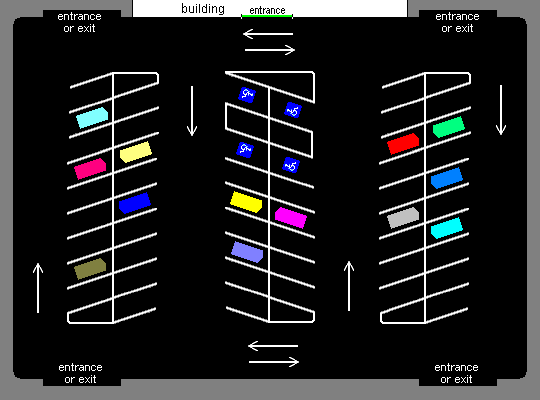
13.Design a Parking Lot System3745 votes
Create a system design for managing a multi-level parking lot, including features like ticketing, space allocation, and vehicle tracking. It assesses system design skills and ability to handle real-world constraints.
💡 Focuses on object-oriented design principles and handling concurrent requests in a scalable system.

14.Design an Online Bookstore System3122 votes
Outline the architecture for an online bookstore, including catalog management, shopping cart, and order processing. It assesses high-level system design and database considerations.
💡 Incorporates considerations for scalability, security, and user experience in e-commerce platforms.

15.Tell me about a challenging project and how you managed it2191 votes
This behavioral question seeks insight into your problem-solving skills, resilience, and ability to navigate complex or high-pressure scenarios. Google values candidates who can reflect on their experiences and articulate the learning points clearly.
💡 It's recommended to use the STAR method (Situation, Task, Action, Result) when preparing answers to this type of question.


