Explore the fascinating world of strange and unusual animals that defy the norms of the animal kingdom. From peculiar adaptations to unique appearances, these creatures showcase the incredible diversity of life on Earth.

1.Pangolin9838 votes
Pangolins are scaly anteaters covered in hard, protective keratin scales, making them one of the most trafficked mammals in the world. They have a unique ability to roll into a tight ball when threatened, offering defense against predators.
💡 Pangolins can consume up to 70 million ants and termites each year.

2.Platypus9248 votes
The platypus is a unique egg-laying mammal known for its duck-bill and webbed feet. It is one of only five extant species of monotremes, a group of egg-laying mammals.
💡 It has venomous spurs on its hind limbs, a rare feature among mammals.
3.Blobfish9248 votes
The blobfish, often dubbed the 'world's ugliest animal', has a gelatinous body that allows it to maintain its shape in deep-sea environments. When brought to the surface, its structure collapses, giving it a decidedly unusual appearance.
💡 Voted the world's ugliest animal in 2013.

4.Kakapo8246 votes
The kakapo is a flightless parrot native to New Zealand, characterized by its green and yellow plumage. It is critically endangered and known for its nocturnal habits and unique mating calls.
💡 It is the only parrot in the world that cannot fly.

5.Narwhal7798 votes
Narwhals are unique marine mammals known for their long, spiral tusks that can reach lengths of up to 10 feet. These tusks are actually elongated teeth and are thought to be used in mating displays and social interactions.
💡 Narwhals are sometimes referred to as the 'unicorns of the sea'.
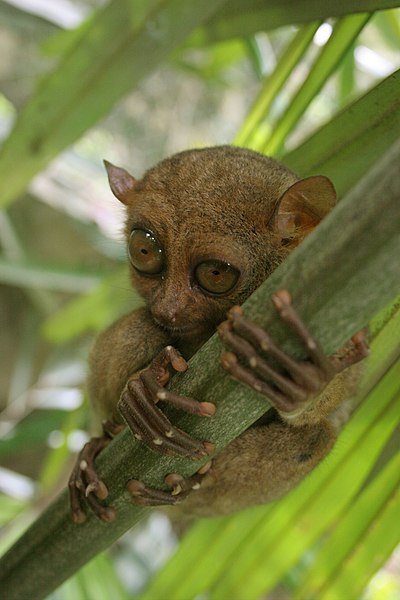
6.Tarsier7422 votes
Tarsiers are small primates characterized by their enormous eyes and long fingers, making them adept at grasping branches. They are known for their nocturnal lifestyle and ability to rotate their heads nearly 180 degrees.
💡 Tarsiers communicate through a variety of vocalizations, including high-pitched calls.

7.Okapi6368 votes
The okapi, often referred to as the 'forest giraffe', is a rare mammal native to the Democratic Republic of the Congo with unique zebra-like stripes on its legs. Despite its close genetic relationship to giraffes, the okapi has a shorter neck and a more horse-like body.
💡 Okapis were unknown to the Western world until the early 20th century.
8.Fossa5786 votes
The fossa is a carnivorous mammal found only in Madagascar, resembling a mix between a cat and a mongoose. It plays a significant role in controlling the lemur population, as it is one of the few predators of these primates.
💡 The fossa is the largest carnivorous mammal on Madagascar.

9.Numbat3492 votes
The numbat is an Australian marsupial known for its long tongue and a diet primarily consisting of termites. With distinctive stripes on its back, it is a unique sight in the forests of Western Australia.
💡 Numbats are diurnal and can consume up to 20,000 termites in a single day.

10.Tuatara3354 votes
The tuatara is a unique reptile native to New Zealand, often considered a 'living fossil' due to its ancient lineage. It has a third eye on the top of its head and can live up to 100 years, making it a fascinating subject of study.
💡 Tuatara are not lizards, even though they may appear similar; they belong to their own distinct order.

11.Axolotl1782 votes
The axolotl is a critically endangered amphibian with a distinctive appearance, known for its external gills that resemble a frilled collar. Native to the lakes of Mexico, this 'walking fish' exhibits remarkable regenerative capabilities, able to regenerate limbs and even parts of its heart and brain.
💡 Axolotls are often referred to as 'Mexican walking fish,' although they are not actually fish.
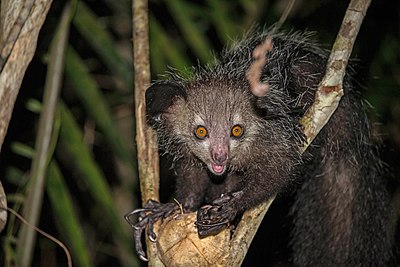
12.Aye-aye1440 votes
The aye-aye is a lemur native to Madagascar, infamous for its unconventional appearance and feeding method. With its long, thin fingers and rodent-like teeth, it has evolved a unique method of tapping on trees to locate insects hidden beneath the bark.
💡 Considered a harbinger of bad luck by some local cultures in Madagascar.

13.Saiga Antelope889 votes
Native to the steppes of Central Asia, the saiga antelope is notable for its unique bulbous nose, which helps filter dust and regulate body temperature during the harsh climates it inhabits. With its distinctively shaped head and a remarkable ability to cope with extreme environments, it is a true symbol of adaptation.
💡 The saiga antelope is critically endangered due to habitat loss and poaching for its horns.


