This list highlights the top most effective project management methodologies widely adopted across various industries. These methodologies facilitate efficient planning, execution, and delivery of projects by providing structured approaches tailored to different project needs. The listed methodologies are recognized for their flexibility, clarity, and proven success in enhancing project outcomes.

1.Agile16088 votes
Agile is a flexible project management methodology emphasizing iterative development, collaboration, and customer feedback. Its adaptive approach allows teams to respond swiftly to changes, making it ideal for dynamic projects and software development.
💡 Agile principles were formalized with the Manifesto for Agile Software Development in 2001.

2.Scrum13865 votes
Scrum is an agile framework focused on iterative progress through short cycles called sprints. It promotes transparency, accountability, and close collaboration among cross-functional teams to deliver value incrementally.
💡 Scrum was formalized as a framework in the early 1990s and has since been adopted beyond software development into other fields.

3.Waterfall11571 votes
Waterfall is a linear project management methodology where phases are completed sequentially from initiation to closure. It is ideal for projects with clear, fixed requirements and well-defined deliverables, ensuring disciplined and predictable workflows.
💡 Waterfall was first introduced by Winston W. Royce in 1970 as an illustrative example of a sequential development process.

4.Kanban3164 votes
Kanban is a visual workflow management method aimed at helping teams visualize work, limit work-in-progress, and maximize efficiency. It originated from manufacturing processes but is now widely used in software development and project management.
💡 Kanban was initially developed by Toyota in the 1940s to improve manufacturing efficiency.

5.PMBOK (Project Management Body of Knowledge)2763 votes
PMBOK is a set of standard terminology and guidelines for project management maintained by PMI. It provides a comprehensive framework covering processes, best practices, and techniques for effective project management.
💡 PMBOK is regularly updated; the sixth edition was published in 2017, providing evolving best practices.
6.Hybrid Methodologies1915 votes
Hybrid methodologies combine elements from different project management approaches, such as Agile and Waterfall, to suit specific project needs. They offer flexibility and tailored workflows for diverse project environments.
💡 The adoption of hybrid approaches has increased as teams seek to balance structure and flexibility in project execution.

7.Hybrid Project Management1794 votes
Hybrid project management combines elements from various methodologies such as Waterfall and Agile to tailor the approach based on project requirements. This flexible method allows teams to leverage the strengths of multiple frameworks for optimal results.
💡 Hybrid approaches are increasingly popular for managing complex projects with evolving scope and requirements.
8.Disciplined Agile Delivery (DAD)1516 votes
DAD is a process decision framework that emphasizes a people-first, learning-oriented approach to agile delivery. It integrates various agile and lean practices to tailor solutions suited to specific organizational needs.
💡 DAD is designed to address enterprise concerns and complex project environments, emphasizing architecture, design, and governance.
9.Scrumban1507 votes
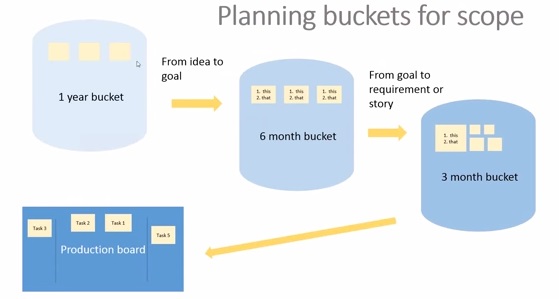
Scrumban combines elements of Scrum and Kanban to provide a flexible framework that supports iterative development with continuous flow. It is often used by teams transitioning from Scrum to Kanban or seeking a hybrid approach.
💡 Scrumban is particularly popular in software development for its adaptability and focus on workflow optimization.

10.Lean Project Management1390 votes
Lean project management focuses on maximizing value by eliminating waste and inefficiencies in processes. It originated from the manufacturing principles of Lean production and emphasizes continuous improvement.
💡 Originally developed for automotive manufacturing, Lean principles are now widely applied in various project management contexts to improve efficiency.
11.Critical Chain Project Management (CCPM)1162 votes
CCPM is a method that emphasizes resource management and buffers to address uncertainties in project schedules. It aims to protect project deadlines by managing uncertainties more effectively than traditional methods.
💡 CCPM was introduced as part of the Theory of Constraints, highlighting the importance of resource management in project success.

12.Integrated Project Delivery (IPD)1077 votes
IPD is a collaborative project delivery approach that integrates people, systems, business structures, and practices to optimize project results. It emphasizes early involvement of stakeholders and shared risks and rewards.
💡 IPD has been widely adopted in architecture, engineering, and construction industries to improve project outcomes through collaboration.
13.PRINCE21073 votes
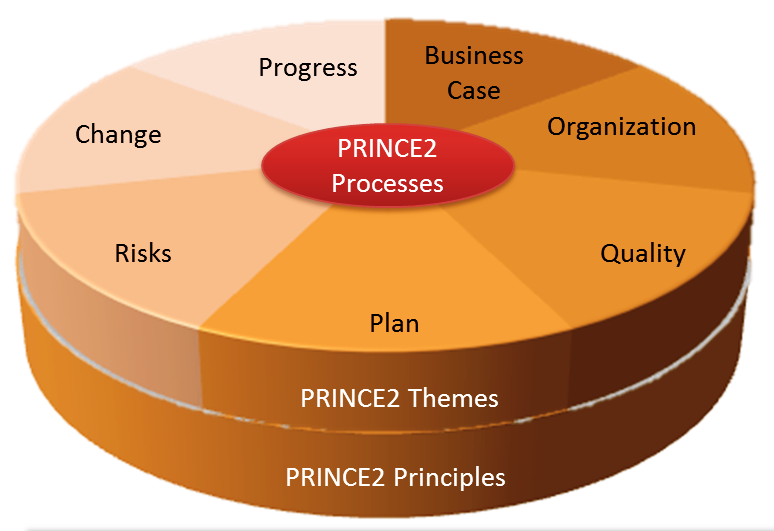
PRINCE2 (Projects IN Controlled Environments) is a process-driven project management methodology emphasizing clear roles, stages, and control mechanisms. It is widely used in the UK and internationally for managing large-scale projects.
💡 PRINCE2 was originally developed for IT projects but has expanded to other sectors and is recognized for its structured approach.

14.EVM (Earned Value Management)1038 votes
Earned Value Management is a project management technique that integrates scope, schedule, and cost to assess project performance and progress objectively. It helps project managers identify variances and forecast future performance.
💡 EVM is mandated in many government and large-scale projects as a standard for performance measurement.

15.Rapid Application Development (RAD)838 votes
RAD emphasizes quick development and iteration of prototypes over extensive planning. It aims to produce high-quality systems within compressed timelines, suitable for projects with changing requirements.
💡 RAD was introduced in the 1980s as a response to the limitations of traditional waterfall models in fast-paced environments.


