This curated list highlights the most proven and respected study techniques for college students aiming to maximize their learning efficiency. Each method is supported by educational research and expert recommendations, providing practical strategies to enhance retention, focus, and understanding in academic pursuits.
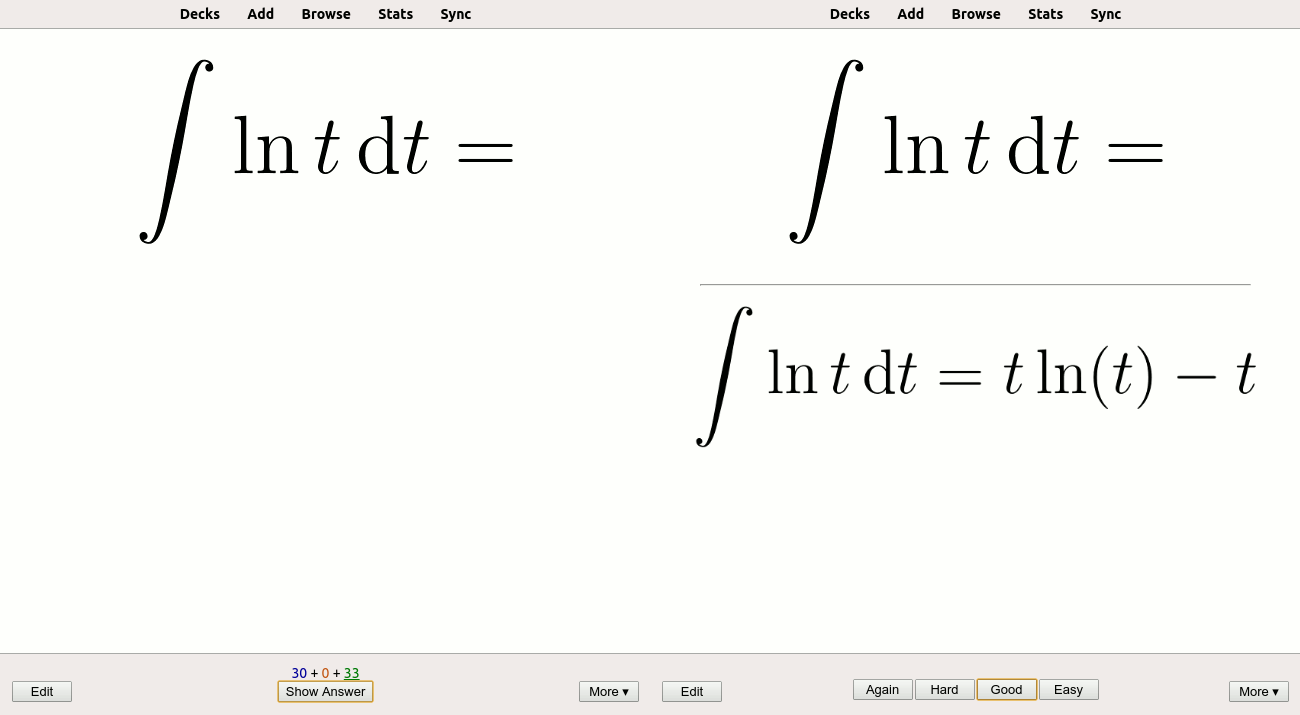
1.Active Recall14936 votes
Active Recall involves actively retrieving information from memory, reinforcing learning and revealing gaps in knowledge. This technique transforms passive review into an engaging process that significantly improves long-term retention.
💡 Research shows students using active recall perform 30% better on tests compared to passive review.

2.Spacing Effect13679 votes
The Spacing Effect involves spreading out study sessions over time rather than cramming, which leads to improved retention and understanding. This technique leverages the brain's natural learning processes, encouraging durable knowledge acquisition.
💡 Implementing spaced repetition can increase knowledge retention by up to 50% over massed study sessions.

3.Pomodoro Technique12872 votes
The Pomodoro Technique segments study time into focused intervals, typically 25 minutes long, followed by short breaks. This approach boosts concentration, reduces fatigue, and keeps motivation high throughout study sessions.
💡 Studies suggest that this method can improve productivity by up to 40%, especially for lengthy or complex tasks.
4.Retrieval Practice3638 votes
Retrieval practice emphasizes recalling information without looking at notes, which strengthens memory and uncovers areas needing improvement. Regular self-testing is a core part of this method for effective learning.
💡 Research indicates that retrieval practice can improve long-term retention more than passive review, making it one of the most effective study techniques.

5.Mind Mapping2925 votes
Mind mapping is a visual technique that helps organize information hierarchically around a central concept, making complex topics easier to understand and recall. It encourages creativity and connects ideas through diagrams, aiding in better retention.
💡 Popularized by Tony Buzan, mind mapping is endorsed by cognitive scientists for enhancing memory and comprehension.

6.Feynman Technique2534 votes
Named after physicist Richard Feynman, this technique involves explaining concepts in simple language as if teaching someone else. It helps identify gaps in understanding and solidifies knowledge through active articulation.
💡 This approach was crucial in Feynman's own learning process; he believed that teaching others is the best way to learn oneself.

7.Interleaving Practice1789 votes
Interleaving involves alternating between different topics or skills while studying, which improves problem-solving and long-term retention by making the brain adapt to various contexts. It contrasts with blocked practice, promoting deeper learning.
💡 Research shows that interleaving prepares students better for real-world application, especially in math and science.


