This list highlights the most suitable operating systems for developers seeking stability, flexibility, and extensive developer tool support. It considers factors such as customization options, community support, and ecosystem compatibility to help developers choose the best platform for their needs.

1.Linux (Ubuntu)26108 votes
Ubuntu, a popular Linux distribution, offers an open-source environment renowned for its stability, security, and extensive customization options, making it a favorite among developers. It supports a wide array of development tools, programming languages, and server environments, facilitating versatile software development.
💡 Supports a vast range of programming languages and development tools out of the box.

2.macOS19276 votes
macOS offers a Unix-based environment with a polished user interface, making it ideal for developers working in creative and software development fields. Its robust ecosystem, seamless integration with Apple hardware, and native support for popular development tools make it a compelling choice.
💡 Recommended by Apple for mobile app development, especially for iOS.

3.Windows 1117610 votes
Windows 11 provides a versatile platform with broad hardware compatibility and extensive software support, making it suitable for a wide range of development tasks. Its integration with Microsoft services and support for multiple development environments cater to diverse developer needs.
💡 Widespread enterprise adoption and compatibility with a vast array of hardware and software.

4.Kali Linux5617 votes
Kali Linux is a Debian-based distribution tailored for penetration testing, security auditing, and ethical hacking. It provides a comprehensive suite of security tools for developers and security researchers.
💡 Kali Linux is maintained by Offensive Security and is widely used in cybersecurity training and assessments.

5.Chrome OS1728 votes
Chrome OS is an operating system developed by Google, based on the Linux kernel and Chrome browser. It is optimized for web development and cloud-based workflows, with support for Linux apps and Android development tools.
💡 Chrome OS has gained popularity among developers for its simplicity and integration with Google services, with recent support for Linux containers to run traditional development environments.

6.OpenBSD1444 votes
OpenBSD is a security-focused Unix-like operating system known for its proactive security features and thorough code auditing. It is prized by developers who prioritize stability and security in their environments.
💡 OpenBSD has a reputation for integrated cryptography and proactive security measures, often used in security-sensitive applications.

7.Arch Linux1222 votes
Arch Linux is a lightweight and flexible Linux distribution that emphasizes simplicity and user-centric customization. It is preferred by developers who want full control over their environment and access to the latest software packages.
💡 Arch Linux uses a rolling release model, ensuring users have access to the most recent versions of software without reinstallation.

8.Fedora1197 votes
Fedora is a Linux distribution sponsored by Red Hat, focusing on cutting-edge technology and open-source innovation. It provides developers with the latest tools and software for experimentation and development.
💡 Fedora serves as a testing ground for features that eventually make their way into enterprise Linux distributions like RHEL.

9.Manjaro Linux1060 votes
Manjaro is an Arch Linux-based distribution that offers an accessible, user-friendly experience with a focus on stability and ease of use. It’s favored by developers who want the power of Arch without the steep learning curve.
💡 Manjaro provides a curated experience with graphical installers and pre-installed tools, making Arch Linux accessible to a broader audience.

10.FreeBSD1007 votes
FreeBSD is a Unix-like operating system known for its robustness, security, and advanced networking features. It is widely used in server environments and for developing network-centric applications.
💡 FreeBSD has a reputation for stability and performance, often serving as the backbone for major internet infrastructure.

11.Alpine Linux800 votes
Alpine Linux is a security-oriented, lightweight Linux distribution based on musl libc and busybox. It’s popular for container environments and minimal developer setups, especially in DevOps.
💡 Alpine Linux is renowned for its small size and security features, making it ideal for Docker containers and cloud-native development.

12.CentOS Stream644 votes
CentOS Stream is a rolling-release Linux distribution positioned as an upstream development platform for Red Hat Enterprise Linux. It’s popular among developers who want a preview of upcoming enterprise features.
💡 CentOS Stream acts as a testing ground for features before they are included in RHEL, making it valuable for developers working on enterprise-grade applications.

13.Haiku OS609 votes
Haiku OS is an open-source operating system inspired by BeOS, emphasizing simplicity, speed, and personal computing. It attracts developers interested in a lightweight, multimedia-oriented platform.
💡 Haiku aims for a clean, easy-to-use interface with powerful multimedia capabilities, making it suitable for creative developers.

14.ReactOS338 votes
ReactOS is an open-source operating system designed to be binary-compatible with Windows applications and drivers. It aims to provide a free, alternative Windows-like experience for developers and users alike.
💡 Though still in alpha, ReactOS aims to allow compatibility with Windows XP and 2003 applications and drivers, making it intriguing for legacy development.
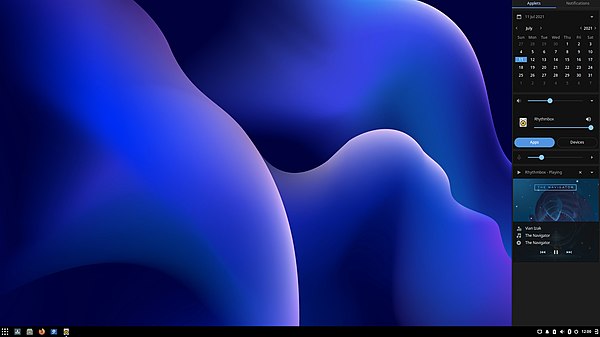
15.Solus OS188 votes
Solus OS is an independent Linux distribution focusing on a user-friendly experience with a rolling release model. It is built from scratch and optimized for desktops, making it ideal for developers seeking stability and simplicity.
💡 Unique for its curated software repository and custom desktop environment, Budgie, Solus aims for a cohesive user experience.


