As we delve into the realm of speculative fiction, several technological concepts from science fiction appear poised to transition into tangible reality. These innovations offer glimpses into a future where humanity's capabilities could be significantly enhanced by advanced technologies.

1.Augmented Reality (AR)12896 votes
Augmented reality technology overlays digital information onto the real world, enhancing the way we interact with our environment. Applications range from gaming to remote assistance and training, creating immersive experiences that blend the virtual and physical worlds.
💡 The Microsoft HoloLens is a leading device in AR, used by industries for training and design.

2.Artificial General Intelligence (AGI)12228 votes
Artificial General Intelligence refers to highly autonomous systems that outperform humans at most economically valuable work. As research progresses, AGI has the potential to revolutionize industries, enhance problem-solving capabilities, and even redefine our understanding of intelligence.
💡 AGI could fundamentally change work dynamics, potentially replacing many jobs while creating new roles in emerging fields.

3.Brain-Computer Interfaces (BCIs)10187 votes
Brain-computer interfaces allow for direct communication between the human brain and external devices, potentially revolutionizing how we interact with technology. This could lead to advancements in assistive devices for those with disabilities, as well as enhancing cognitive capabilities in healthy individuals.
💡 BCIs have been used to help paralyzed individuals control robotic limbs merely through thought.

4.Quantum Computing9983 votes
Quantum computing harnesses the principles of quantum mechanics to perform computations at unprecedented speeds, far beyond the capabilities of classical computers. This next-generation technology promises breakthroughs in fields ranging from cryptography to complex scientific simulations.
💡 Some predictions suggest that quantum computers will outperform traditional computers in specific tasks by 2030.

5.Brain Mapping9909 votes
Brain mapping involves the use of advanced imaging technologies to create detailed maps of the brain's structure and function. This could lead to breakthroughs in understanding mental illnesses and brain disorders.
💡 Utilizes techniques like fMRI and PET scans to visualize brain activity.

6.Robotics in Medicine9622 votes
The use of robotics in medicine includes surgical robots that enhance precision and reduce recovery times for patients. These technologies can assist with minimally invasive procedures, providing significant advantages over traditional surgical methods.
💡 The da Vinci Surgical System is one of the most widely used surgical robots, with thousands of procedures performed annually.

7.Nuclear Fusion Power Plants9438 votes
Nuclear fusion power plants aim to generate energy through the same processes that power the sun, offering a clean and virtually limitless source of energy. Although technically challenging, breakthroughs in plasma confinement could make this technology viable.
💡 The ITER project is the world's largest ongoing fusion experiment.

8.Autonomous Drones9200 votes
Autonomous drones are unmanned aerial vehicles that can carry out missions without human intervention, typically using AI for navigation and decision-making. These drones have applications ranging from delivery services to surveillance and environmental monitoring.
💡 DJI is a leading manufacturer of drones that are widely used in commercial and recreational settings.

9.Wearable Health Monitors9155 votes
Wearable health monitors are devices that continuously track health metrics such as heart rate, activity levels, and even sleep patterns. These devices aim to empower users with real-time health insights and promote proactive healthcare.
💡 Fitbit was one of the first companies to popularize wearable fitness tracking.

10.Smart Cities9106 votes
Smart cities utilize interconnected technologies and data analytics to improve urban living through better traffic management, energy efficiency, and public safety. These initiatives can vastly enhance the way urban centers operate.
💡 The trend uses IoT devices for data collection and effective city management.
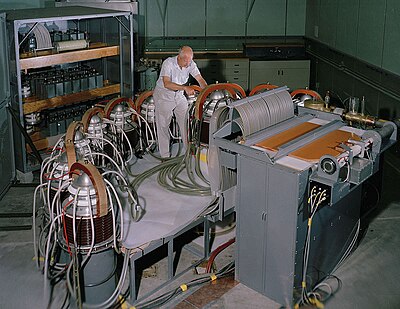
11.Fusion Energy8681 votes
Fusion energy aims to replicate the sun's power generation process, providing a virtually limitless source of clean energy. Although still in experimental stages, successful projects could lead to a significant reduction in reliance on fossil fuels.
💡 The ITER project is the world's largest fusion experiment, involving 35 nations.

12.Bioprinting8095 votes
Bioprinting is an innovative technology that involves 3D printing biological tissues and organs using living cells. This technology holds the potential to revolutionize organ transplants and regenerative medicine.
💡 Organovo was the first company to successfully print human liver tissue.

13.Hyperloop8083 votes
The Hyperloop is a proposed mode of passenger and freight transportation that involves pods traveling through low-pressure tubes at high speeds. This could drastically reduce travel times between major cities.
💡 The concept was first suggested by Elon Musk in 2013.

14.Space Elevators7960 votes
Space elevators envision a groundbreaking method for transporting objects into space via a tether anchored to the Earth, enabling cheaper and more efficient access to space. This concept, though still largely theoretical, could revolutionize space travel and exploration.
💡 The concept was popularized by Arthur C. Clarke in his novel 'The Fountains of Paradise'.

15.Nanobots7883 votes
Nanobots are microscopic robots designed to perform specific tasks at the cellular level, potentially revolutionizing medicine and drug delivery. They hold promise for targeted therapy in cancer treatment and other medical applications.
💡 Drexler is often referred to as the 'father of nanotechnology.'


