This list celebrates groundbreaking visionaries who foresaw advancements and societal shifts long before they came to fruition. Their unique insights and forward-thinking ideas continue to resonate today, shaping the future in ways they could only dream of.

1.Albert Einstein25348 votes
Renowned for his theory of relativity, Albert Einstein revolutionized the understanding of physics and opened new realms of possibility in technology and the universe. His visionary ideas about time and space have had a lasting impact on the scientific community and continue to inspire advances in various fields.
💡 Awarded the Nobel Prize in Physics in 1921

2.Steve Jobs20414 votes
As the co-founder of Apple Inc., Steve Jobs redefined technology and design, envisioning products like the iPhone and iPad long before they became market staples. His visionary approach combined art with technology, creating influential ecosystems centered around user experience.
💡 He famously introduced the first iPhone in 2007, revolutionizing the smartphone industry.

3.Nikola Tesla18182 votes
Nikola Tesla was a pioneer in electrical engineering and is credited with numerous inventions that laid the groundwork for modern alternating current electricity supply systems. His imaginative concepts of wireless communication and energy transmission were well ahead of his time, influencing countless technological advancements.
💡 Conceptualized the idea of a wireless Internet as early as 1900

4.Elon Musk16264 votes
Elon Musk is a technology entrepreneur and CEO known for his work with SpaceX and Tesla Motors. He is recognized for his vision of a future involving space colonization and sustainable energy solutions.
💡 Aims to make life multi-planetary with plans for human settlement on Mars.

5.Isaac Asimov15441 votes
A prolific science fiction writer, Isaac Asimov imagined technologies such as robotics and artificial intelligence in a way that has profoundly influenced both literature and real-world scientific research. His forward-thinking concepts not only entertained but also provided critical insights into the ethical implications of technology.
💡 Popularized the term 'robotics' in the 1940s
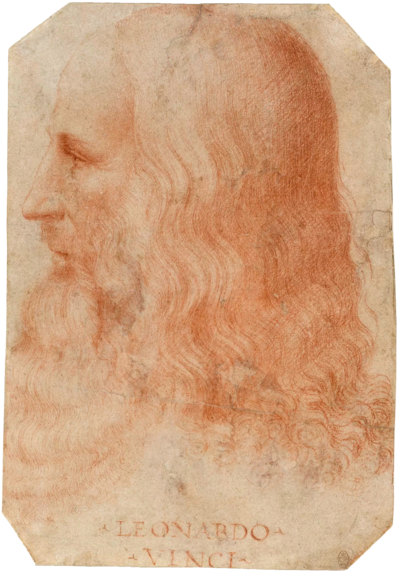
6.Leonardo da Vinci12713 votes
A true polymath, Leonardo da Vinci was not only a master painter but also an inventor and scientist who conceptualized flying machines, armored vehicles, and robots centuries before they became reality. His visionary sketches and writings demonstrate a profound understanding of the human form and the natural world.
💡 Known as the quintessential Renaissance man, he produced iconic works like the Mona Lisa and The Last Supper.

7.Maria Montessori10528 votes
Maria Montessori was an Italian physician and educator best known for the educational method that bears her name, which emphasizes self-directed learning and hands-on activities. Her innovative approach to education paved the way for individualized learning in the modern educational system.
💡 Montessori schools have since proliferated worldwide, transforming early childhood education.

8.George Orwell10091 votes
George Orwell was a British author and journalist known for his dystopian novels '1984' and 'Animal Farm.' He explored the themes of totalitarianism, surveillance, and the manipulation of truth, making his work eerily prescient for contemporary society.
💡 '1984' continues to be referenced in discussions about privacy and government control.

9.Bill Gates9333 votes
Co-founder of Microsoft Corporation, Bill Gates has been a central figure in the technology revolution. His vision of a computer on every desk has transformed the way people interact with technology.
💡 Gates has given away over $45 billion to charitable causes.

10.Jane Goodall9278 votes
Primatologist Jane Goodall is renowned for her groundbreaking work with chimpanzees in the wild and her insights into animal behavior and social structures. Through her research, she emphasized the importance of conservation and wildlife protection, shaping the future of primatology.
💡 Goodall's work has led to a greater understanding of the connection between humans and animals.

11.Arthur C. Clarke8802 votes
A British science fiction writer and futurist, Arthur C. Clarke is best known for works like '2001: A Space Odyssey' which envisioned space travel and advanced technologies far ahead of his time. His theories on satellite communication and space exploration have had a lasting impact on the field.
💡 He famously predicted the invention of communication satellites in 1945, years before they became a reality.

12.Ray Kurzweil8169 votes
An American inventor and futurist, Ray Kurzweil is known for his predictions about technology and artificial intelligence, particularly the concept of the 'singularity'—a point in time when machines surpass human intelligence. His work has greatly influenced the field of transhumanism and the future of human-machine interfaces.
💡 He predicted that by 2045, artificial intelligence will surpass human intelligence, fundamentally changing civilization.

13.H.G. Wells8120 votes
H.G. Wells was an English author and pioneer of science fiction, known for seminal works like 'The Time Machine' and 'War of the Worlds.' His imaginative narratives often addressed social issues and proposed futuristic technologies, making him one of the genre's most influential figures.
💡 Considered the father of science fiction, many of his concepts have permeated popular culture.

14.Tim Berners-Lee7639 votes
Inventor of the World Wide Web, Tim Berners-Lee designed the first web browser and server. His vision for an open internet has transformed how we communicate and share information globally.
💡 He was knighted by Queen Elizabeth II in 2004 for his pioneering work.

15.Stephen Hawking7060 votes
An acclaimed theoretical physicist, Stephen Hawking is best known for his contributions to cosmology and black holes. His book 'A Brief History of Time' brought complex scientific concepts to the public and inspired future generations.
💡 He published scientific papers until the age of 76.


