This list celebrates the groundbreaking contributions of individuals who have profoundly shaped the landscape of human thought and creativity. From scientific revolutions to artistic masterpieces, these geniuses have left an indelible mark on history and continue to inspire across generations.

1.Isaac Newton48232 votes
Isaac Newton was a key figure in the scientific revolution and is best known for his laws of motion and universal gravitation. His work laid the foundation for classical mechanics and significantly advanced the fields of physics and mathematics.
💡 Newton's contributions to optics include the formulation of the theory of color and the invention of the reflecting telescope.

2.Nikola Tesla37928 votes
Nikola Tesla was an inventor and electrical engineer who is best known for his contributions to the design of the modern alternating current electric supply system. His innovative ideas and experiments paved the way for numerous technologies we use today.
💡 Tesla held over 300 patents throughout his lifetime, many of which are still influential.

3.Stephen Hawking30058 votes
Stephen Hawking was a theoretical physicist and cosmologist known for his work on black holes and the nature of the universe. Despite being diagnosed with ALS and facing extreme physical limitations, he became one of the most well-known scientists of his time.
💡 Hawking was awarded the CBE in 1982 and his book has sold over 25 million copies worldwide.
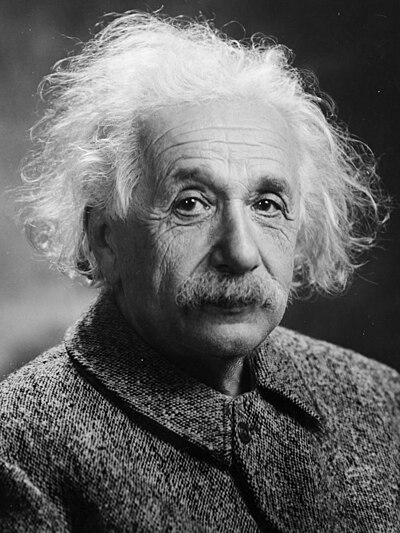
4.Albert Einstein25455 votes
As one of the most celebrated physicists of all time, Albert Einstein's theory of relativity fundamentally altered the way we understand space, time, and energy. His groundbreaking work laid the foundation for modern physics and has had lasting impacts on technology and our comprehension of the universe.
💡 Won the Nobel Prize in Physics in 1921 for his explanation of the photoelectric effect.
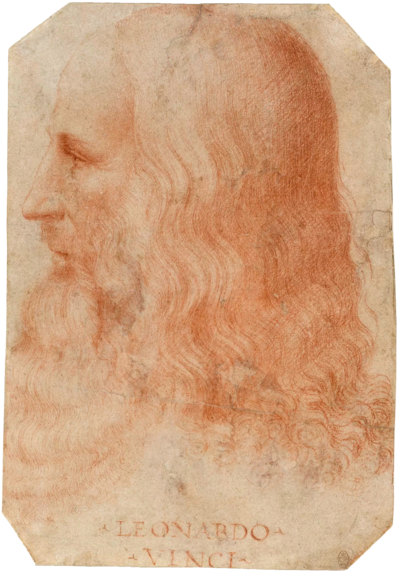
5.Leonardo da Vinci23542 votes
A polymath whose interests spanned a vast array of fields, Leonardo da Vinci was an artist, scientist, and inventor whose work epitomized the Renaissance spirit. His masterpieces, including the Mona Lisa and The Last Supper, along with his visionary inventions, showcase his unparalleled imagination and insight.
💡 Known for his detailed anatomical sketches and innovative designs, da Vinci was centuries ahead of his time.

6.Ada Lovelace16623 votes
Ada Lovelace is often credited as the first computer programmer for her work on Charles Babbage's early mechanical general-purpose computer, the Analytical Engine. Her notes on the engine include what is considered to be the first algorithm intended for implementation on a computer.
💡 Lovelace's vision extended beyond her time, predicting the future capabilities of computers, including the potential for music composition and art.

7.Marie Curie15575 votes
Marie Curie was a pioneering physicist and chemist whose groundbreaking research on radioactivity paved the way for advancements in science and medicine. As the first woman to win a Nobel Prize and the only person to win in two different scientific fields, her legacy continues to inspire future generations of scientists.
💡 First person to win Nobel Prizes in two different scientific fields: Physics and Chemistry.

8.Pablo Picasso9746 votes
A Spanish painter, sculptor, and one of the most influential artists of the 20th century, Picasso is known for co-founding the Cubist movement. His ability to innovate and explore various styles made significant contributions to modern art.
💡 His painting 'Les Demoiselles d'Avignon' is considered a cornerstone of modern art.

9.Charles Darwin8803 votes
An English naturalist and biologist, Darwin is famous for his theory of evolution by natural selection, which fundamentally changed the way we understand life on earth. His groundbreaking book, 'On the Origin of Species,' is considered one of the most significant works in scientific literature.
💡 Darwin's voyage on the HMS Beagle led him to develop his theories on natural selection based on observations of species in the Galapagos Islands.

10.Galileo Galilei6046 votes
An Italian astronomer, physicist, and mathematician, Galileo is often referred to as the 'father of modern observational astronomy.' His improvements to the telescope and consequent astronomical observations played a key role in advancing the scientific revolution.
💡 Galileo was tried by the Roman Inquisition and found 'vehemently suspect of heresy' for advocating the heliocentric model.

11.Richard Feynman5640 votes
An American theoretical physicist, Feynman contributed to the development of quantum electrodynamics and is well-known for his charismatic teaching style and ability to explain complex scientific concepts simply. He played a significant role in the Manhattan Project during World War II.
💡 Feynman also authored several popular books, including 'Surely You're Joking, Mr. Feynman!' which shares anecdotes from his life.

12.Isaac Asimov5278 votes
An American author and professor of biochemistry, Asimov was a prolific science fiction writer and popularizer of science. He is known for his 'Foundation' series and the 'Robot' series, which laid the groundwork for modern science fiction.
💡 Asimov wrote or edited over 500 books and is known for his contributions to numerous fields besides science fiction.

13.James Clerk Maxwell4445 votes
A Scottish scientist, Maxwell is best known for formulating the classical theory of electromagnetic radiation, bringing together electricity, magnetism, and light as manifestations of the same phenomenon. His work laid the groundwork for many aspects of modern physics.
💡 Maxwell's equations are the foundation of classical electromagnetism, optics, and electric circuits.

14.Sigmund Freud3891 votes
An Austrian neurologist and the founder of psychoanalysis, Freud introduced a revolutionary approach to understanding the human mind and behavior. His theories on the unconscious mind and the significance of dreams have had a lasting impact on psychology and culture.
💡 Freud's model of the psyche, with the id, ego, and superego, remains a foundational concept in psychology.


