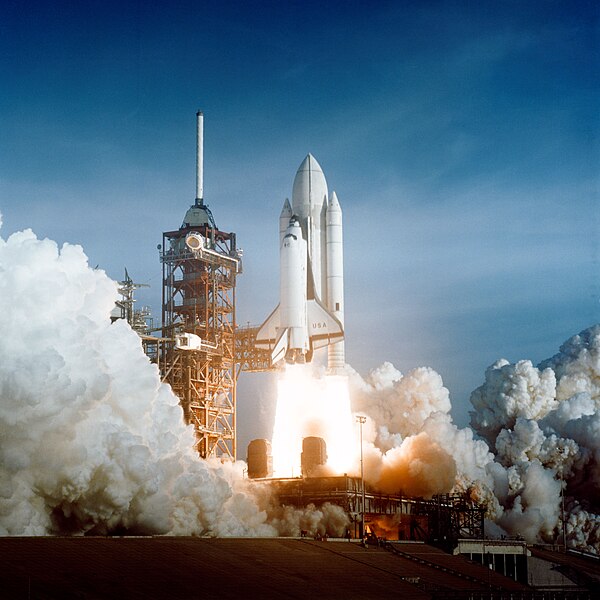
This list highlights some of the most significant and influential space missions that have advanced our understanding of the universe. It includes historic missions, groundbreaking exploratory projects, and notable spacecraft that have contributed to scientific discovery and technological innovation.
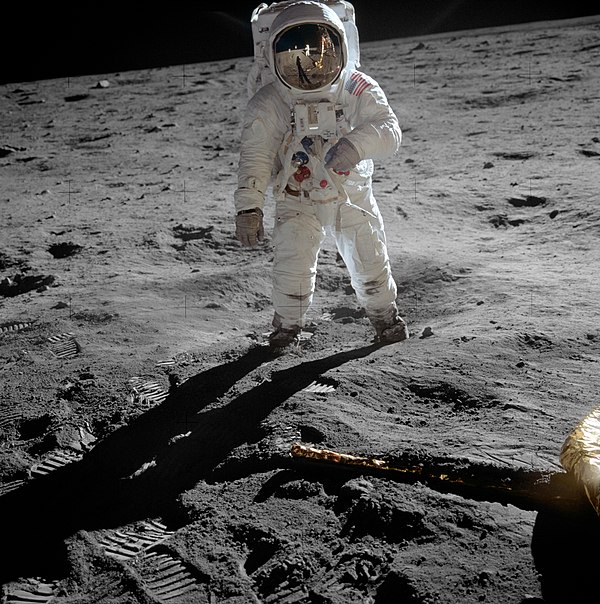
1.Apollo 1199534 votes
Apollo 11 was the first manned mission to land on the Moon, marking a historic milestone in space exploration. It demonstrated human capability to achieve complex space travel and provided valuable scientific data.
💡 First humans to walk on the Moon on July 20, 1969

2.Voyager 176128 votes
Launched by NASA in 1977, Voyager 1 is the farthest human-made object from Earth, studying the outer planets and now traveling through interstellar space. Its journey has provided unparalleled data about the distant reaches of our solar system.
💡 Carrying the Golden Record, it also serves as a message to potential extraterrestrial civilizations

3.Mars Rover Perseverance41077 votes
Perseverance is NASA's latest rover mission sent to explore Mars' Jezero Crater to search for signs of ancient life and collect samples for future return. It is equipped with advanced scientific instruments and a helicopter drone, Ingenuity.
💡 First mission to utilize a helicopter drone for powered flight on another planet

4.Juno spacecraft10159 votes
Juno is NASA's mission launched in 2011 to study Jupiter's composition, gravity field, magnetic field, and polar magnetosphere. Its goal is to understand the planet's origin and evolution.
💡 Juno's name is derived from Roman mythology, where Juno is the wife of Jupiter.

5.Hubble Space Telescope9423 votes
Launched in 1990, the Hubble Space Telescope has provided some of the most detailed images of our universe ever captured. It has significantly advanced our understanding of cosmology, galaxy formation, and black holes.
💡 Hubble has taken over 1.4 million observations and contributed to over 15,000 scientific papers.

6.Sentinel Satellites9297 votes
The Sentinel satellites are part of the European Union's Copernicus program, providing Earth observation data for environmental monitoring, climate change, and disaster management. They help improve weather forecasting and resource management worldwide.
💡 Sentinel-6, launched in 2020, is dedicated to measuring sea levels with unprecedented precision.

7.Vostok 18878 votes
Vostok 1 was the first human spaceflight launched by the Soviet Union, carrying Yuri Gagarin into orbit on April 12, 1961. It marked the first time a human had traveled into space and orbited the Earth.
💡 Yuri Gagarin remains the only human to have completed an orbit alone in space.

8.Mars Science Laboratory (Curiosity Rover)8787 votes
Launched in 2011 and landing on Mars in 2012, Curiosity explores the Gale Crater to assess Mars' past habitability. It has discovered evidence of ancient water flows and complex organic molecules.
💡 Curiosity's findings suggest that Mars could have supported microbial life in its past.

9.International Space Station8438 votes
The ISS is a modular space station collaboratively operated by NASA, Roscosmos, ESA, JAXA, and CSA. It serves as a microgravity laboratory for scientific research across multiple disciplines.
💡 The ISS has been continuously inhabited since November 2000 and is considered one of humanity's most ambitious space collaborations.

10.OSIRIS-REx8291 votes
NASA's OSIRIS-REx mission, launched in 2016, is tasked with visiting asteroid Bennu, collecting samples, and returning them to Earth. It aims to study the early solar system and planetary defense mechanisms.
💡 OSIRIS-REx successfully collected asteroid material in 2020, and the samples are expected to return in 2023.
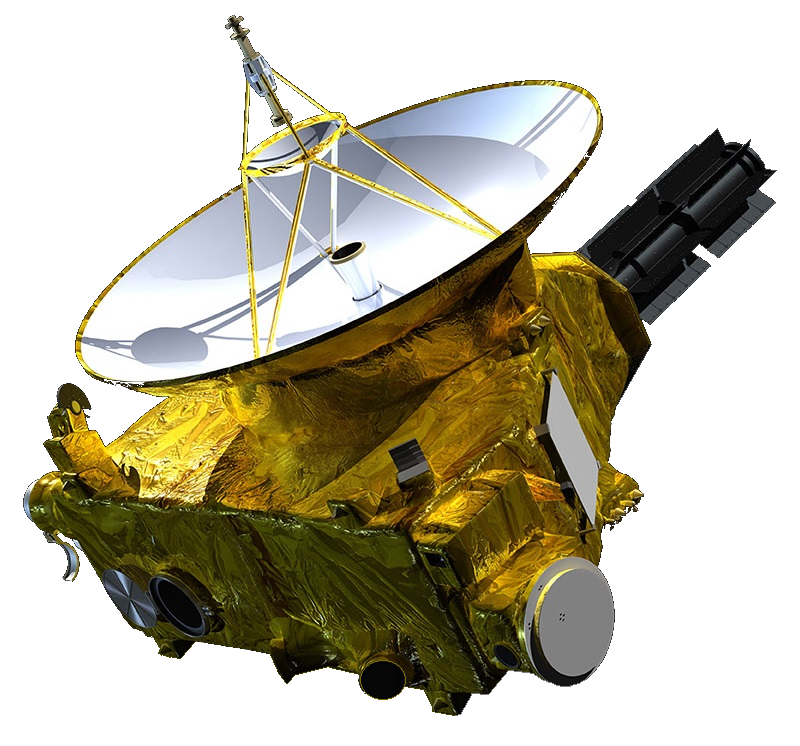
11.New Horizons8254 votes
Launched in 2006, New Horizons conducted a flyby of Pluto in 2015, providing the first close-up images of the dwarf planet. It is now exploring the Kuiper Belt, studying other icy objects in the outer solar system.
💡 New Horizons is the fastest spacecraft ever launched from Earth, traveling at over 16 kilometers per second.

12.Lunar Gateway7371 votes
Lunar Gateway is a planned NASA-led international space station orbiting the Moon, serving as a staging point for lunar and deep space missions. It aims to support sustainable human exploration and scientific research.
💡 The Gateway will facilitate future crewed missions to Mars and the Moon's south pole.

13.Mars Express6992 votes
Mars Express is a European Space Agency mission launched in 2003 to study the Martian surface, atmosphere, and subsurface. It has provided high-resolution images and valuable data about the planet's geology and climate.
💡 Mars Express was the first planetary mission to detect liquid water beneath the surface of Mars.

14.Chandrayaan-26719 votes
Chandrayaan-2 is India's lunar exploration mission launched by ISRO in 2019, aiming to study the lunar surface, mineralogy, and exosphere. It includes an orbiter, lander, and rover components.
💡 Chandrayaan-2 was India's first attempt to soft-land on the Moon; the lander Vikram lost communications during the descent.

15.ExoMars Rover (Rosalind Franklin)5635 votes
Part of the European Space Agency and Roscosmos' ExoMars mission, Rosalind Franklin aims to search for signs of past life on Mars by drilling below the surface. Originally scheduled for 2020, it is now planned for launch in the coming years.
💡 The rover's drill can reach depths of up to 2 meters, a key to detecting preserved biosignatures.