This list highlights the most acclaimed and connoisseur-approved sound design techniques that elevate cinematic storytelling. These methods are essential for creating immersive audio experiences, combining innovative technology and artistic craftsmanship to enhance emotional impact and realism.

1.Foley Art5571 votes
Foley involves recreating everyday sound effects in sync with the visual footage, adding depth and realism to scenes. Master Foley artists can subtly transform the auditory experience, making on-screen action more visceral and authentic.
💡 Legendary Foley artist Jack Foley pioneered many of the techniques still used today in film.
2.Sound Layering and Mixing4916 votes
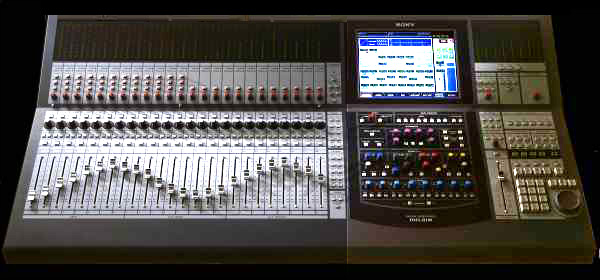
Layering multiple sound elements with different textures and frequencies creates a rich, immersive soundscape. Expert mixing balances these layers to draw focus, evoke mood, and support storytelling without overwhelming the viewer.
💡 Advanced mixing often involves multichannel surround sound formats like Dolby Atmos to enhance spatial accuracy and immersion.

3.Diegetic and Non-Diegetic Sound Integration4410 votes
Effectively blending on-screen sounds (diegetic) with background scores or sound effects (non-diegetic) guides viewer attention and enhances emotional resonance. Skilled integration ensures a seamless auditory experience that heightens storytelling clarity.
💡 Notable example includes Hans Zimmer's innovative use of non-traditional sounds to complement visual storytelling.

4.Ambisonic Sound3199 votes
Utilizing surround sound techniques to create a 3D audio environment that extends beyond stereo, immersing viewers within spatialized soundscapes. Critical for modern VR and 360-degree filmmaking where spatial accuracy is paramount.
💡 Gerzon's invention revolutionized immersive audio, adopted in numerous high-end film productions and virtual environments.

5.Layered Sound Design2511 votes
This technique involves combining multiple sound elements to create rich, textured auditory experiences that enhance emotional impact. Connoisseurs focus on subtle layering to build immersive worlds and dialogues that feel organic and nuanced.
💡 Pioneered early use of multitrack layering in films like 'The Godfather Part II'.

6.Non-Linear Sound Editing2325 votes
This approach involves editing sound out of chronological order to craft specific emotional or narrative effects. It is highly valued by sound designers who seek to enhance storytelling via sonic ambiguity or surprise.
💡 He pioneered nonlinear editing techniques that revolutionized post-production workflow.
7.Surface Noise Utilization2297 votes
Incorporating natural surface noises—like paper rustling or fabric friction—ground the audience in realism or add subtle thematic cues. The technique is prized by aficionados for its ability to emotionally anchor a scene through tactile sound cues.
💡 Used extensively in 'Star Wars' for creating immersive alien environments.

8.Sound Perspective Manipulation2242 votes
Adjusting the perceived distance and location of sounds in a mix to simulate depth and spatial relationships. Mastery in this technique can subtly influence audience perception and emotional response.
💡 Critical in immersive sound design for films like 'Jurassic Park', utilizing advanced panning and reverberation.

9.Dynamic Range Shaping2226 votes
Manipulating the disparity between loud and quiet sounds emphasizes mood and tension, guiding audience focus and emotional response. Skilled practitioners use compression and expansion carefully to sustain dramatic dynamics.
💡 Integral part of blockbuster film soundtracks, balancing clarity with expressive variance.

10.Microphone Technique Innovation2098 votes
Advanced mic placement and recording techniques capture unanticipated acoustic nuances, lending authenticity and richness to the soundscape. Experts in this realm often develop custom rigs tailored to specific environments or effects.
💡 His experimentation with unconventional microphone placements drew acclaim in both music and film sound design.

11.Spectral Morphing2015 votes
Spectral morphing involves transforming one sound into another to create seamless transitions, often used for surreal sonic effects. Experts tailor these transformations to heighten tension or to evoke otherworldly atmospheres.
💡 Child of advanced digital audio processing, integral to modern soundscapes in sci-fi and fantasy films.

12.Silence and Space880 votes
Strategic use of silence and spatial pauses can heighten tension or emotional impact in a scene. It involves carefully planning moments with minimal sound to emphasize the absence of noise.
💡 Walter Murch pioneered the use of silence as a narrative device in film editing and sound design, notably in 'The Godfather Part II'.

13.Ambience Design722 votes
Ambience involves crafting the background soundscape to reflect the setting's atmosphere and geography, immersing viewers in the environment. It includes natural sounds, city noise, weather effects, and other subtle audio cues.
💡 Effective ambience can drastically alter the perceived space and mood, often blending multiple layers to create a seamless world.

14.Sound Motifs714 votes
Recurrent sound motifs are used to symbolize characters, themes, or emotions, creating a layered auditory experience. They can evolve over the course of a film to reflect narrative shifts.
💡 Sound motifs help to subconsciously cue viewers and deepen storytelling, with some becoming iconic, like the shark's motif in Jaws.

15.Reverse Engineering Sound Design645 votes
This technique involves analyzing existing sounds or scenes and deconstructing how particular effects are achieved, often inspiring innovative approaches. It’s used to mimic or adapt sounds creatively.
💡 Reverse engineering can reveal unconventional methods used in iconic film sound design, allowing new creators to learn and adapt techniques.


