This list highlights key battles of World War 1 that played a pivotal role in shaping the course of history during the Great War. Each engagement was marked by strategic importance and significant human sacrifice, influencing the eventual outcomes of national conflicts and peace treaties.

1.Battle of Verdun14203 votes
Taking place from February 21 to December 18, 1916, this was one of the longest and costliest battles in World War I. The French forces fought to hold their position against the relentless German offensive, leading to massive casualties on both sides.

2.Battle of the Somme10690 votes
Fought from July to November 1916, the Battle of the Somme was one of the largest battles of the First World War, notable for its unprecedented scale and one of the bloodiest days in British military history. This battle marked a significant shift in tactics and military strategy and became a symbol of the brutal nature of trench warfare.

3.Battle of the Marne9420 votes
This critical battle occurred from September 6 to 12, 1914, and resulted in a decisive victory for the Allies, halting the German advance into France. It marked the end of the German offensive and set the stage for trench warfare.

4.Battle of Passchendaele8716 votes
Fought from July to November 1917, this battle is known for its horrendous mud and the extensive loss of life. The Allies aimed to gain control of the ridges surrounding the Belgian town of Ypres.
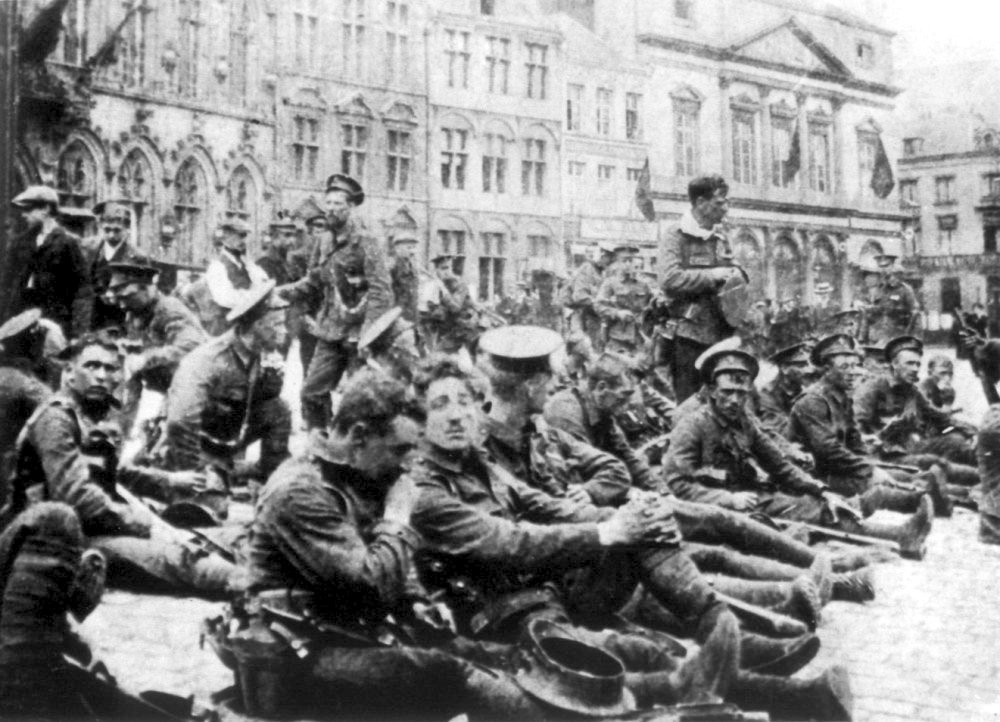
5.Battle of Mons8651 votes
Fought on August 23, 1914, it was the first major battle between British and German forces in World War I. The British Expeditionary Force put up a strong resistance against a numerically superior German army before being forced to retreat.
6.Battle of Gallipoli8123 votes
Taking place from April 1915 to January 1916, the Gallipoli Campaign was an Allied military campaign aimed at securing a sea route to Russia through the Dardanelles and capturing the Ottoman capital of Constantinople. The campaign is often cited as a significant setback for the Allies, leading to heavy casualties and a rethinking of military strategies in the region.

7.Battle of Jutland7977 votes
Fought between May 31 and June 1, 1916, this naval battle was between the British Royal Navy's Grand Fleet and the Imperial German Navy's High Seas Fleet. It was the largest naval battle of World War I and had significant strategic implications.

8.Battle of Tannenberg7235 votes
This battle, occurring from August 26 to September 30, 1914, marked a significant victory for Germany against Russian forces. It effectively destroyed much of the Russian Second Army and is considered a key early battle in the Eastern Front.

9.Battle of Cambrai5858 votes
Fought from November 20 to December 7, 1917, this battle is noted for the first large-scale use of tanks in warfare, leading to significant initial success for the British forces. However, the gains were ultimately reversed by a German counterattack.

10.Second Battle of Ypres5523 votes
Taking place in April and May of 1915, it marked the first major use of poison gas by the German army on the Western Front. The battle resulted in significant casualties and showcased the brutal nature of trench warfare.

11.Battle of the Lys4334 votes
This battle took place from April 9 to April 29, 1918, and was part of the German Spring Offensive. The Allies faced severe losses and were pushed back significantly, leading to a reassessment of their strategies.

12.Battle of Arras3699 votes
This battle took place from April 9 to May 16, 1917, and was launched by the British to divert German attention from the French forces at Verdun. It featured significant use of tunneling and surprise attacks, leading to heavy fighting in the region.
13.Battle of Lysefjord3083 votes
Though lesser-known, this critical battle took place in February 1918, influencing naval tactics during World War I. Its strategies would lay the groundwork for future engagements in the conflict.


