Thought experiments are imaginative exercises that provoke critical thinking and philosophical analysis through hypothetical scenarios. These mental simulations challenge our understanding of reality and prompt us to explore complex ideas and principles in a unique and engaging manner.

1.Schrodinger's Cat24926 votes
This famous thought experiment illustrates the complexity of quantum mechanics through the scenario of a cat that is simultaneously alive and dead, depending on an unobserved quantum event. It highlights the paradoxes inherent in the interpretations of quantum theory and raises questions about observation and reality.
💡 Created in 1935, it serves as a critique of the Copenhagen interpretation of quantum mechanics.

2.The Trolley Problem24028 votes
A staple in ethics and moral philosophy, the Trolley Problem presents a scenario where a person must choose between two difficult outcomes, compelling them to reflect on utilitarianism and moral duty. This thought experiment contrasts the consequences of inaction versus action, fostering intense debate about morality and ethics.
💡 Widely used in discussions of ethics, it has numerous variations that further explore moral implications.

3.The Simulation Hypothesis18757 votes
This thought experiment posits that reality as we know it might be a sophisticated simulation created by a more advanced civilization, prompting inquiries into existence, consciousness, and technology. It invites individuals to ponder the nature of reality and what it truly means to exist in an increasingly digital world.
💡 Has gained traction among tech leaders and futurists, suggesting implications for AI and reality.

4.The Ship of Theseus8947 votes
This thought experiment questions whether an object that has had all of its components replaced remains fundamentally the same object. It explores concepts of identity and change, especially in the context of personal identity and continuity over time.
💡 It challenges the distinction between the physical composition and the identity of objects.

5.The Brain in a Vat8504 votes
This thought experiment posits a scenario where a brain is kept alive in a vat and connected to a computer, simulating experiences as if it were still in a body. It questions the nature of reality, perception, and knowledge, raising issues in epistemology and metaphysics.
💡 It is frequently discussed in the context of skepticism about the external world.

6.Maxwell's Demon7461 votes
This thought experiment involves a hypothetical demon that can sort particles in a gas, seemingly creating a perpetual motion machine by violating the second law of thermodynamics. It raises questions about entropy, information, and the nature of physical laws.
💡 It has led to significant philosophical discussions regarding the nature of information in thermodynamics.

7.The Experience Machine7141 votes
Proposed by philosopher Robert Nozick, this thought experiment invites individuals to consider if they would choose to plug into a machine that provides unlimited pleasure. It challenges the value of authentic experiences versus mere pleasure, addressing the nature of happiness and fulfillment.
💡 It suggests that people value authenticity and meaningful experiences over synthetic happiness.

8.The Infinite Monkey Theorem5695 votes
This theorem posits that given infinite time, a monkey randomly pressing keys on a typewriter would eventually type out any given text, such as the complete works of Shakespeare. It raises questions about probability and randomness in a seemingly orderly universe.
💡 It emphasizes the role of infinity in discussions regarding chance and creativity.
9.The Problem of Evil5383 votes
This philosophical issue questions how an omniscient, omnipotent, and benevolent deity can allow suffering in the world. It delves into theodicy, exploring the coexistence of evil and divine goodness.
💡 The problem has led to profound theological and philosophical discussions for centuries.

10.The Paradox of Choice5118 votes
This thought experiment explores the idea that more choices can lead to less satisfaction and increased anxiety. It questions the assumption that providing more options always leads to better decisions.
💡 Schwartz published a bestselling book on the subject that has influenced consumer psychology.

11.The Concept of Time4969 votes
This thought experiment challenges the linear perception of time, asking if the past, present, and future can exist simultaneously. It asks participants to consider different philosophical views on the nature of reality.
💡 Debates around time have been significant in both philosophical and scientific discussions.

12.Newcomb's Paradox4372 votes
This thought experiment involves a game between a player and a predictor, exploring concepts of free will and determinism. The player must choose between two boxes, one transparent with a visible monetary reward and one opaque that may contain an even larger sum based on the predictor's ability to foresee the choice.
💡 It raises questions about rational decision-making when faced with uncertainty.
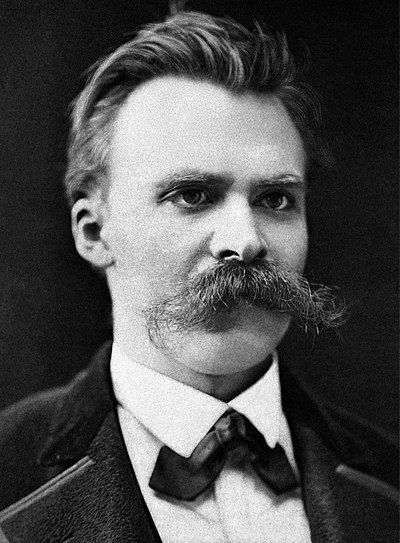
13.The Eternal Return4073 votes
This philosophical concept suggests that the universe and our lives are recurring eternally in exactly the same form. It prompts us to confront the value and purpose of life and our choices.
💡 Nietzsche proposed this idea as a test to assess the value of one’s life choices.
14.Nozick's Experience Machine3989 votes
This thought experiment proposes a machine that can provide any pleasurable experience one desires, raising questions about hedonism and the nature of happiness. It challenges individuals to consider the value of reality versus illusion.
💡 It is used to argue against hedonistic ethics by emphasizing the importance of genuine experiences.

15.The Omnipotence Paradox3954 votes
This paradox examines whether an omnipotent being can create a rock so heavy that it cannot lift it. It raises questions about the nature of power and limits of even the most powerful entities.
💡 The paradox has been discussed for centuries, challenging religious and philosophical viewpoints.


