This collection showcases pivotal philosophical ideas that have shaped human thought and understanding throughout the ages. From existential inquiries to ethical considerations, these concepts provide profound insights into the nature of existence and human behavior.

1.Existentialism12793 votes
Existentialism is a philosophical movement that emphasizes individual existence, freedom, and choice, asserting that people create their own meaning in life. This idea challenges traditional notions of purpose, encouraging a deep exploration of personal authenticity and responsibility.
💡 Existentialism gained significant traction in the 20th century during the aftermath of World War II, reflecting societal disillusionment and the search for meaning.

2.Absurdism9145 votes
Absurdism is a philosophical perspective that explores the conflict between human tendency to seek inherent meaning in life and the universe's apparent lack of meaning. Promoted by thinkers like Albert Camus, it addresses the struggle of finding purpose in an indifferent world.
💡 Camus famously said, 'The absurd is born out of this confrontation between the human call and the unreasonable silence of the world.'

3.Utilitarianism8533 votes
Utilitarianism is a consequentialist philosophy that suggests the best action is the one that maximizes utility, usually defined as that which produces the greatest well-being of the greatest number. This idea challenges moral frameworks by emphasizing outcomes over intentions, prompting ethical discussions about the nature of happiness and collective welfare.
💡 Utilitarianism has played a critical role in political and ethical thought, influencing social policies and humanitarian efforts across the globe.

4.Pragmatism7787 votes
Pragmatism is a philosophical tradition that considers the practical consequences of beliefs and ideas as the primary basis for their truth. Developed in the late 19th century, it emphasizes action and real-world applications over abstract principles.
💡 William James is often referred to as the 'Father of American psychology' and contributed significantly to the development of pragmatism.

5.Stoicism7205 votes
Stoicism is a Hellenistic philosophy that teaches the development of self-control and fortitude as a means of overcoming destructive emotions. Founded in ancient Greece, Stoicism advocates for rationality and virtue, guiding individuals toward peace of mind through acceptance of the present moment.
💡 Stoicism has seen a resurgence in contemporary self-help and psychological practices, particularly in discussions around resilience and mindfulness.

6.Feminist Philosophy5789 votes
Feminist philosophy examines the ways in which gender has shaped our understanding of knowledge, ethics, and the world. It critiques traditional philosophy for its male-centered views and seeks to address issues of gender inequality and oppression.
💡 Simone de Beauvoir's book 'The Second Sex' is considered a foundational text in feminist philosophy.
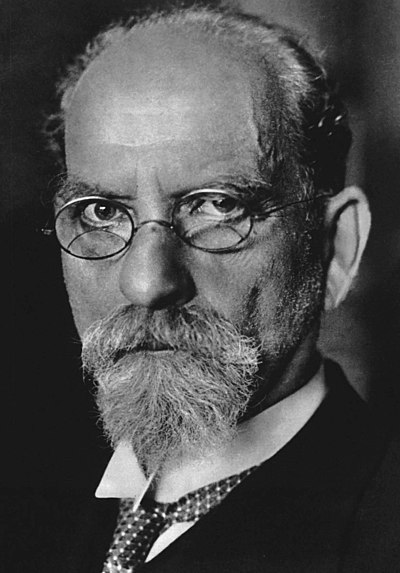
7.Phenomenology5099 votes
Phenomenology is a philosophical movement that focuses on the structures of experience and consciousness. It aims to study how individuals perceive and interpret their experiences, emphasizing the first-person perspective.
💡 Edmund Husserl, the founder of phenomenology, was influential in the development of existentialism and hermeneutics.

8.Hedonism1600 votes
Hedonism is the philosophical doctrine that pleasure or happiness is the highest good. It advocates that the pursuit of pleasure should be the primary goal of human life, presenting various forms such as ethical and psychological hedonism.
💡 Aristippus, a student of Socrates, taught that pleasure was the only intrinsic good.

9.Epicureanism1570 votes
Epicureanism is a philosophical system founded by the ancient Greek philosopher Epicurus. It teaches that the pursuit of pleasure and avoidance of pain are the primary goals in life, with an emphasis on simple pleasures, friendship, and self-reflection.
💡 Epicurus believed that fear of the gods and death are the two main sources of human unhappiness.
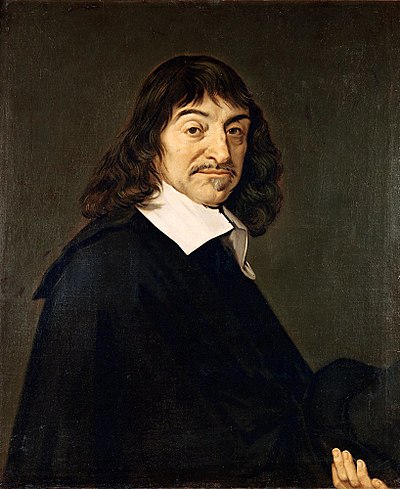
10.Rationalism1384 votes
Rationalism is an epistemological stance asserting that reason is the primary source of knowledge. It often contrasts with empiricism, which emphasizes sensory experience; rationalists believe in innate knowledge and deduction.
💡 René Descartes is famously known for the phrase 'Cogito, ergo sum,' which translates to 'I think, therefore I am.'

11.Objectivism1267 votes
Objectivism is a philosophical system developed by Ayn Rand, emphasizing individualism, rational self-interest, and capitalism. It asserts that reality exists independently of consciousness, and that individuals should pursue their own happiness as their highest moral purpose.
💡 Objectivism was a major influence on the libertarian movement in the latter half of the 20th century.

12.Postmodernism1066 votes
Postmodernism is a late 20th-century reaction against the ideas and principles of modernism, questioning the notions of objective truth, identity, and authority. It often characterizes itself through irony, playfulness, and a focus on relative truths.
💡 Lyotard famously stated that in a postmodern society, 'there are no grand narratives,' emphasizing the fragmented nature of knowledge.

13.Social Contract Theory938 votes
Social Contract Theory proposes that individuals come together to form societies based on an implicit contract for mutual benefit. The theory has been used to justify the authority of the state while explaining the legitimacy of political power.
💡 Different philosophers have varying views on the nature of the social contract, with Hobbes emphasizing security and Rousseau focusing on freedom and equality.

14.Transcendentalism905 votes
Transcendentalism is a philosophical movement that emerged in the early 19th century in America, emphasizing the inherent goodness of people and nature. It promotes the belief that individuals can transcend the physical world and reach deeper truths through intuition and personal experience.
💡 Transcendentalists advocated for social reform and were outspoken on issues such as abolitionism and women's rights.

15.Deontology845 votes
Deontology is an ethical theory that uses rules to distinguish right from wrong. It is often associated with the philosopher Immanuel Kant, who argued that actions are morally right if they adhere to set rules, regardless of the outcome.
💡 Kant believed that moral obligations are derived from a universal moral law that applies to all rational beings.


