Dive into the depths of human thought with this exploration of unanswerable philosophical questions that have intrigued thinkers for centuries. Each query invites contemplation on existence, knowledge, and the nature of reality, challenging our understanding of the world and ourselves.
1.What is the meaning of life?10778 votes
This profound question has been the cornerstone of philosophical debate throughout history. Countless interpretations and theories abound, yet a definitive answer remains elusive, highlighting the complexities of human existence.
💡 Has been a central topic in philosophy, religion, and literature since ancient times.
2.Is free will an illusion?9502 votes
This question probes the very essence of autonomy and responsibility, challenging the belief that humans can make independent choices. Philosophers and scientists often argue over determinism versus free will, leading to profound implications for moral accountability.
💡 Debates on free will have implications in ethics, psychology, and neuroscience.
3.Does a higher power exist?8010 votes
The inquiry into the existence of a deity or supreme being has sparked debate and contemplation across cultures for millennia. This question not only influences philosophical discourse but also shapes beliefs, morality, and human understanding of the universe.
💡 This question underlies many theological and philosophical arguments.

4.What is reality?4237 votes
Philosophers have long debated the nature of reality, questioning whether it is objective, subjective, or a combination of both. This inquiry leads to discussions about perception, existence, and the nature of truth.
💡 The question has implications in science, art, and the interpretation of experiences.

5.Are there parallel universes?3886 votes
This question delves into the possibility of multiple, perhaps infinite, universes that exist alongside our own. It raises intriguing implications for the nature of reality and the limits of our understanding.
💡 Everett introduced the Many Worlds Interpretation of quantum mechanics, suggesting that all possible histories and futures exist simultaneously.

6.Is time travel possible?3747 votes
This question probes into the concepts of time and whether the past can be revisited or changed. It raises paradoxes that challenge our understanding of physics and philosophy.
💡 Einstein's theory of relativity supports the notion that time is not fixed and could allow for time travel under certain conditions.
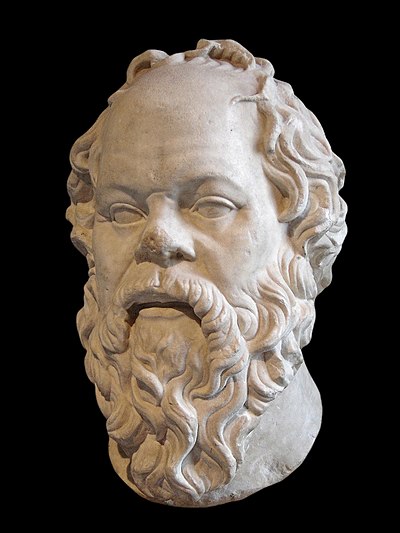
7.What happens after we die?3025 votes
This question explores the concept of an afterlife and the nature of consciousness beyond physical existence. Different cultures and philosophies propose various answers, but empirical evidence remains elusive.
💡 Many religious traditions offer distinct views on this subject, contributing to the rich tapestry of human beliefs.

8.What is consciousness?2573 votes
The nature of consciousness remains one of the biggest mysteries in philosophy and science. Understanding why and how we have subjective experiences is still an unresolved issue.
💡 Chalmers coined the term 'the hard problem of consciousness' to address the difficulty of explaining how physical processes in the brain give rise to subjective experience.

9.What is the nature of time?2527 votes
This question examines whether time is linear or cyclical and how it relates to our perception of the universe. Philosophers and scientists continue to debate whether time is a fundamental aspect of the universe or a construct of human cognition.
💡 Bergson distinguished between 'measured time' and 'lived time,' arguing that human experience of time can't be fully captured by scientific measures.

10.What constitutes a just society?2307 votes
This question explores the criteria for fairness and justice within a society. Philosophers have differing views on what makes a society truly just, focusing on equality, rights, and liberty.
💡 Rawls's 'A Theory of Justice' introduced the concept of the 'veil of ignorance' in designing a just society.
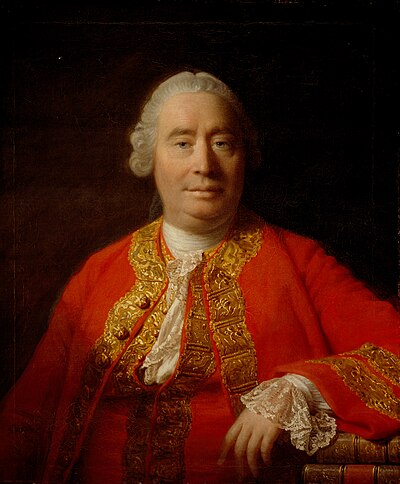
11.What is the self?2278 votes
This question investigates whether the concept of 'self' is an illusion or a definitive part of our identity. It leads to inquiries about the continuity of personal identity over time and through change.
💡 Hume argued that the self is a bundle of perceptions and does not ultimately exist as a singular, enduring entity.
12.Is morality universal?2154 votes
This question investigates whether moral principles are objective and apply across cultures or if they are culturally relative. The debate shapes discussions on ethics, law, and human rights.
💡 Various ethical frameworks exist, ranging from utilitarianism to deontology, each with differing views on moral absolutes.
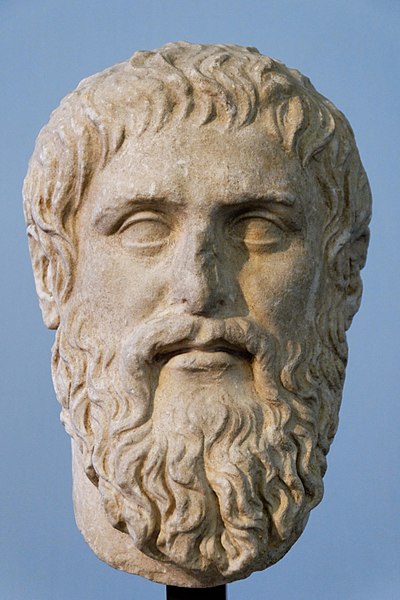
13.What is the nature of beauty?1864 votes
This question seeks to define what constitutes beauty, exploring its subjective and objective dimensions. The discourse covers aesthetics and cultural influences on perceptions of beauty.
💡 Plato famously argued that beauty is an eternal form, reflecting higher truths.
14.What is the origin of consciousness?1745 votes
This profound question revolves around how consciousness arises and what it fundamentally is. Despite extensive study, the origins of self-awareness remain one of philosophy's greatest mysteries.
💡 Chalmers is known for articulating the 'hard problem of consciousness', distinguishing between the 'easy' and 'hard' problems of consciousness.
15.Is there a limit to human knowledge?1705 votes
This question addresses the boundaries of human understanding and whether there are truths that are inherently unknowable. It prompts discussion about how far science and philosophy can take us.
💡 Kant argued that our knowledge is constrained by the structures of our cognition.


