Despite advances in scientific understanding, some myths persist in the cultural psyche, eluding definitive debunking. These enduring beliefs challenge our comprehension of the world and highlight the limits of scientific inquiry in unraveling every mystery of existence.

1.Astrology12729 votes
Astrology posits that the positions of celestial bodies can influence human events and personality traits. While millions adhere to astrological beliefs, its scientific validity is often challenged, leading to a debate over its relevance.
💡 Astrology has ancient roots, tracing back to Babylonian civilization.

2.Dark Matter10340 votes
Dark matter is a hypothetical form of matter that is believed to constitute about 27% of the universe, yet it has yet to be directly observed or understood. Its elusive properties continue to fuel scientific inquiry and debate, marking a significant gap in our knowledge of cosmic composition.
💡 The term 'dark matter' was first coined in the 1930s by astronomer Fritz Zwicky, who noted the missing mass in the Coma galaxy cluster.

3.Placebo Effect9723 votes
The placebo effect illustrates the phenomenon where patients experience real improvements in health after receiving a treatment with no therapeutic value. This curious interplay between mind and body raises questions about the complexities of human psychology and the mechanisms of medical treatment.
💡 Studies show that even when individuals know they are taking a placebo, they can still experience genuine physiological changes.

4.The Mandela Effect9446 votes
This phenomenon refers to a collective false memory where a large group remembers an event differently than how it occurred. Named after Nelson Mandela, many people mistakenly believe he died in prison in the 1980s, even though he was released and became South Africa's president.
💡 The name 'Mandela Effect' was coined in 2009 by Fiona Broome after discovering that she, along with many others, incorrectly remembered Mandela's death.

5.Hauntings8647 votes
Hauntings refer to experiences wherein individuals perceive a presence or activity in a location, often linked to spirits of the deceased. While anecdotal accounts abound, scientific explanations tend to dismiss them as psychological phenomena.
💡 Ghost tours are a popular activity in many cities, often highlighting haunted locations.

6.Food Myths8548 votes
Various food myths, like the idea that eating carrots improves eyesight or that sugar causes hyperactivity, persist despite scientific evidence contradicting them. These misconceptions continue to influence dietary choices and health beliefs.
💡 Research indicates that public perceptions often do not align with scientific understanding of nutrition.

7.Bigfoot8504 votes
Bigfoot, also known as Sasquatch, is a cryptid said to inhabit North American forests, with anecdotal sightings dating back centuries. Despite numerous claims and purported evidence, definitive proof of its existence remains elusive.
💡 Various expeditions and searches continue to seek proof of Bigfoot's existence, contributing to its pop culture status.
8.Cryptids8204 votes
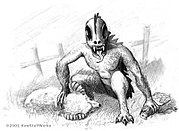
Cryptids are creatures whose existence is based on anecdotal evidence but has yet to be proven by scientific means, such as Bigfoot or the Loch Ness Monster. They captivate public imagination, often leading to expeditions and investigations despite a lack of tangible proof.
💡 The term 'cryptozoology' refers to the study of these legendary creatures.

9.Quantum Consciousness8166 votes
This is the theory suggesting that consciousness arises from quantum phenomena in the brain. While intriguing, it remains largely speculative with no definitive scientific validation.
💡 Roger Penrose posited this theory in his book 'The Emperor's New Mind' and it has spurred significant debate among scientists.

10.Flying Saucers7562 votes
Flying saucers are often associated with UFO sightings and extraterrestrial activity, perceived as metallic craft or disks. Despite many reported sightings, concrete evidence remains largely anecdotal and debated.
💡 The term 'flying saucer' was popularized in the 1950s, sparking extensive UFO folklore.

11.Reincarnation7399 votes
The belief in reincarnation posits that souls are reborn into new bodies after death. Although this concept is rooted in various cultural and religious beliefs, science has yet to provide empirical evidence to support its existence.
💡 Reincarnation ideas date back thousands of years and can be found in many eastern religions, including Hinduism and Buddhism.

12.Psychic Abilities6957 votes
Psychic abilities encompass a range of extraordinary claims including telepathy, clairvoyance, and precognition. Despite anecdotal experiences, scientific efforts have been unable to conclusively prove the existence of such phenomena.
💡 The term 'psychic' originated in the 19th century and incorporates many claims of supernatural insight.
13.Government Conspiracy Theories6950 votes
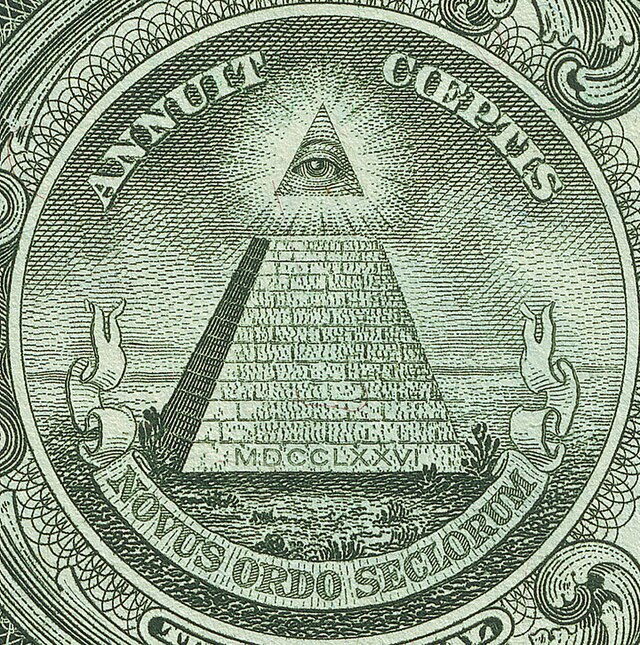
Conspiracy theories regarding government cover-ups, such as UFO sightings or secret experiments, permeate popular culture and often lack verifiable evidence. Despite this, belief in these theories remains widespread.
💡 Some individuals argue that nominal government secrecy fuels these conspiracy theories.

14.Voodoo Death6811 votes
Voodoo death refers to a phenomenon where individuals believe they are cursed or fated to die, resulting in actual death due to psychological distress. This chilling intersection of belief and mortality highlights the power of cultural narratives and their tangible effects on individuals' physical well-being.
💡 The concept was popularized by anthropologist Walter Cannon in the early 20th century, following observations of cultural practices among indigenous groups.

15.Ghosts6583 votes
Ghosts are often described as spirits of the deceased that remain on Earth and can interact with the living. Despite numerous claims and experiences, science has yet to provide a definitive explanation or proof for their existence.
💡 Reports of ghost sightings date back thousands of years and span numerous cultures.


