This list highlights several scientists whose contributions have been overshadowed by more prominent figures but are equally significant in their respective fields. Each scientist has made impactful discoveries that have shaped our understanding of the world, yet they remain relatively unknown compared to their more famous counterparts.

1.Nikola Tesla25567 votes
A visionary inventor and electrical engineer, Nikola Tesla is best known for his development of alternating current (AC) electricity supply systems. Despite being overshadowed during his lifetime by contemporaries like Thomas Edison, Tesla's work laid the foundational technology for modern electrical systems.
💡 Tesla said, 'If you want to find the secrets of the universe, think in terms of energy, frequency, and vibration.'

2.Lise Meitner18310 votes
Lise Meitner was an Austrian-Swedish physicist who played a crucial role in the discovery of nuclear fission, although her contributions were largely overlooked for many years. Her collaboration with Otto Hahn led to groundbreaking discoveries in radioactivity, and she became the first woman to hold a full professorship at a German university.
💡 Meitner's work was instrumental in the creation of nuclear energy, yet she was denied the Nobel Prize in Chemistry awarded to Hahn.

3.Rosalind Franklin15215 votes
Rosalind Franklin was a pioneering scientist whose work with X-ray diffraction was vital to the discovery of the DNA double helix structure. Despite her critical contributions, she was largely unrecognized during her lifetime and only gained prominence posthumously for her role in molecular biology.
💡 Franklin's X-ray photographs were crucial for James Watson and Francis Crick in formulating their DNA model, yet her contributions remained largely uncredited in historical accounts.

4.Chien-Shiung Wu10355 votes
Chien-Shiung Wu was a Chinese-American experimental physicist who made significant contributions to nuclear physics. She is best known for the Wu experiment, which proved that weak interactions do not conserve parity, challenging established physical theories.
💡 Despite her groundbreaking work, she was not awarded the Nobel Prize, which she had helped to make possible.

5.Emmy Noether9423 votes
Emmy Noether was a mathematician known for her groundbreaking contributions to abstract algebra and theoretical physics. Her work, particularly Noether's theorem, explained the connection between symmetries and conservation laws in physics, which is fundamental to modern theoretical physics.
💡 Often referred to as the most important woman in the history of mathematics, she faced substantial gender-based challenges throughout her career.

6.Henrietta Leavitt8694 votes
Henrietta Leavitt was an astronomer whose work on the relationship between the luminosity and the period of Cepheid variable stars was pivotal for measuring cosmic distances. Her discoveries laid the groundwork for the later work of Edwin Hubble and significantly advanced our understanding of the universe.
💡 Her work was largely unrecognized during her lifetime, but it became essential in the field of astronomy.
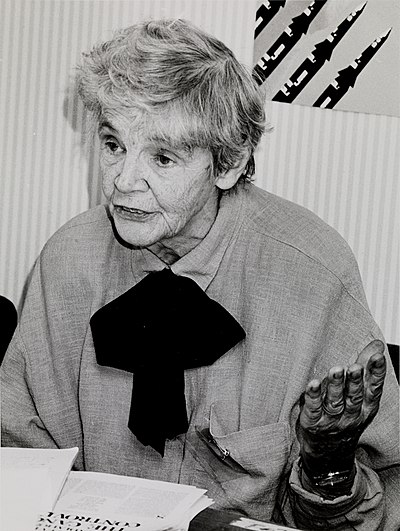
7.Alice Stewart7579 votes
Alice Stewart was a British epidemiologist who played a crucial role in establishing the link between radiation exposure and cancer risk. Her research on the effects of prenatal X-rays significantly impacted public health policy related to medical imaging.
💡 She faced significant opposition and skepticism from the medical community during her career.

8.Ada Lovelace1958 votes
Ada Lovelace is often regarded as the first computer programmer for her work on Charles Babbage's early mechanical general-purpose computer, the Analytical Engine. She wrote notes on the engine that are seen as the first algorithm intended to be carried out by a machine.
💡 Her notes on the Analytical Engine were published in 1843 and were ahead of their time.

9.Ynes Mexia1456 votes
Ynes Mexia was a Mexican-American botanist who made significant contributions to the study of plant specimens in South America. Throughout her career, she collected thousands of plant specimens, many of which were new to science.
💡 Despite starting her career at the age of 51, she became an accomplished botanist known for her extensive expeditions.

10.Max Planck1357 votes
Max Planck was a theoretical physicist who originated quantum theory, which revolutionized our understanding of atomic and subatomic processes. His work earned him the Nobel Prize in Physics in 1918.
💡 Planck's constant is a fundamental part of quantum mechanics.

11.Sofia Kovalevskaya1160 votes
Sofia Kovalevskaya was a pioneering Russian mathematician known for her contributions to analysis, differential equations, and mechanics. She was the first woman to obtain a doctorate in mathematics in modern Europe and also worked on the theory of partial differential equations.
💡 She was the first female professor in modern Europe and made significant contributions to the field of mathematics.

12.Félix d'Hérelle1149 votes
Félix d'Hérelle was a microbiologist and co-discoverer of bacteriophages, viruses that attack bacteria. His discovery has significant implications for medicine, particularly in the treatment of bacterial infections.
💡 He was a pioneer in the development of phage therapy as an alternative to antibiotics.
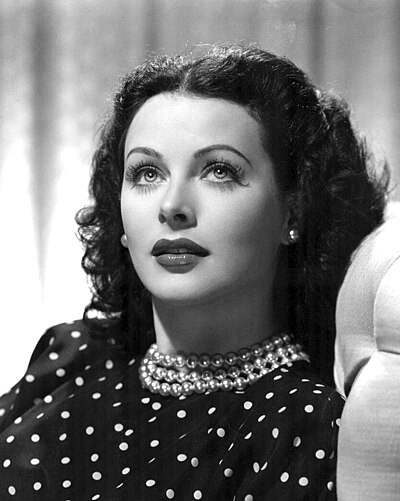
13.Hedy Lamarr1084 votes
Hedy Lamarr was an actress and inventor whose work in developing frequency hopping spread spectrum technology laid the foundation for modern wireless communication. Despite her Hollywood career, her technical contributions were not widely recognized until later.
💡 She was inducted into the National Inventors Hall of Fame in 2014.
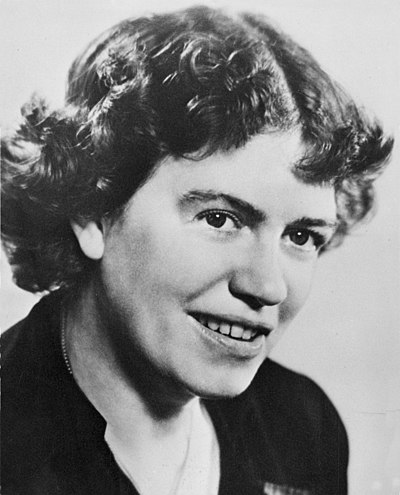
14.Margaret Mead1078 votes
Anthropologist Margaret Mead was instrumental in the study of the relationship between culture and personality, influencing the way we understand human behavior. Her work focused on the cultures of the South Pacific and their implications for society.
💡 She authored several influential books, including 'Coming of Age in Samoa.'

15.Gregory Pincus1031 votes
Gregory Pincus was an American biologist known for his role in developing the first oral contraceptive pill. His research revolutionized reproductive health and provided women control over their reproductive rights.
💡 Pincus's work significantly shaped the sexual revolution in the 1960s.


