Albert Einstein, a towering figure in the world of physics, is best known for his groundbreaking theories of relativity and contributions to quantum mechanics. His work not only changed how we understand the universe but also laid the foundations for modern physics, influencing countless aspects of science and technology.

1.Einstein's Prediction of Gravitational Waves16840 votes
In his general theory of relativity, Einstein predicted the existence of gravitational waves, ripples in spacetime caused by certain movements of mass. These waves were directly detected by LIGO in 2015, confirming Einstein's century-old prediction.
💡 This discovery earned the 2017 Nobel Prize in Physics for the founders of LIGO.

2.Theory of Relativity13044 votes
The Theory of Relativity, comprising special and general relativity, revolutionized our understanding of space, time, and gravity. This pivotal scientific theory transformed fundamental concepts in physics and continues to be a cornerstone of modern scientific thought.
💡 The Theory of Relativity fundamentally changed the way we perceive time and space, demonstrating that they are interconnected.

3.General Theory of Relativity12207 votes
Published in 1915, this theory revolutionized our understanding of gravity, proposing that gravity is not a force but a curvature in spacetime due to mass. It has been confirmed through various experiments and remains a cornerstone of modern physics.
💡 The theory led to predictions of phenomena such as black holes and gravitational waves, which have been observed in recent years.

4.Photoelectric Effect10519 votes
Albert Einstein's 1905 paper on the photoelectric effect established the concept that light can behave as both a wave and a particle, thereby contributing to quantum theory. This work was pivotal in demonstrating the quantization of energy.
💡 Einstein received the Nobel Prize in Physics in 1921 for this groundbreaking work.

5.Nobel Prize in Physics 192110350 votes
Awarded to Einstein for his explanation of the photoelectric effect, the Nobel Prize in Physics 1921 recognized his groundbreaking contributions to quantum theory. This prestigious award added to his legacy as one of the most influential scientists in history.
💡 Einstein was awarded the Nobel Prize not for his most famous relativity work, but for his contributions to quantum mechanics.

6.E=mc²10255 votes
E=mc², one of the most famous equations in physics, encapsulates the equivalence of mass and energy, illustrating how they can be converted into one another. This equation has been pivotal in advancing both theoretical physics and practical applications in various fields such as nuclear energy.
💡 E=mc² is known as the most recognized equation in modern science, symbolizing the convergence of mass and energy.

7.Special Theory of Relativity9498 votes
Published in 1905, this theory revolutionized our understanding of space and time, introducing concepts such as time dilation and length contraction. It establishes that the laws of physics are the same for all non-accelerating observers.
💡 This theory provided the foundation for modern physics and changed our concept of the universe.
8.The Quantum Theory8053 votes
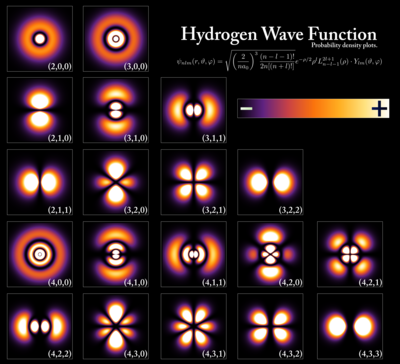
Contributed to the development of quantum theory, Einstein proposed the idea that light can behave as both a particle and a wave, influencing the branch of physics. His work laid the groundwork for new understanding in atomic and subatomic processes.
💡 Einstein famously felt uneasy with the randomness of quantum mechanics, stating 'God does not play dice with the universe.'

9.Einstein's Firmament7805 votes
Einstein's Firmament is a concept that explains how the universe is structured, focusing on spacetime and the role of gravity in cosmic phenomena. It emphasizes the interconnectedness of space and time as dimensions shaped by massive objects.
💡 The firmament theory has shaped the way we understand cosmology and the behavior of the universe.

10.Einstein's Letters6742 votes
Einstein corresponded throughout his life with various influential figures, offering insights into science, philosophy, and politics. Many of these letters reveal his thoughts on war, peace, and the role of scientists in society.
💡 Some of his letters have fetched millions at auction.

11.Einstein's Refrigerator4737 votes
This is a design concept for an eco-friendly refrigerator developed by Einstein and his colleague Leo Szilard. It operates without electricity and uses only heat to create a cooling effect, highlighting innovative approaches to energy use.
💡 Einstein's invention was later patented in 1930.

12.Princeton University4722 votes
Albert Einstein spent the latter part of his career as a professor at Princeton, where he contributed to the field of theoretical physics. The university became a center for his work and many frontiers of modern physics.
💡 Einstein was a member of the Institute for Advanced Study at Princeton.
13.Unified Field Theory4594 votes
Einstein spent much of his later life attempting to formulate a Unified Field Theory, an attempt to bring together electromagnetic and gravitational forces into a single framework. Although he was not able to complete it, his work laid the foundation for future research in theoretical physics.
💡 The quest for a Unified Field Theory continues to challenge physicists to this day.
14.The Einstein-Szilard Petition3252 votes
In 1939, Einstein co-signed a letter to then-President Franklin D. Roosevelt advocating for the development of atomic research in the United States. This letter was significant in initiating the Manhattan Project.
💡 This letter emphasized the potential of nuclear fission and its military implications.
15.Einstein's Theories on Capitalism and Socialism2433 votes
Einstein wrote extensively on social and economic issues, advocating for a planned economy and critiquing unfettered capitalism. His views presented a synthesis of ethical considerations and economic systems, emphasizing social justice and equality.
💡 In his essay, 'Why Socialism?', he argued for a cooperatively managed economy rather than traditional capitalism.


