Unsolved problems in various fields represent the frontiers of human knowledge and understanding, challenging experts to expand the existing boundaries. These enduring mysteries not only stimulate intellectual curiosity but also drive innovation and exploration across disciplines.

1.The Goldbach Conjecture9340 votes
The Goldbach Conjecture posits that every even integer greater than two can be expressed as the sum of two prime numbers. Despite extensive numerical evidence supporting this assertion, it remains unproven.
💡 First suggested by Goldbach in a letter to Euler in 1742.
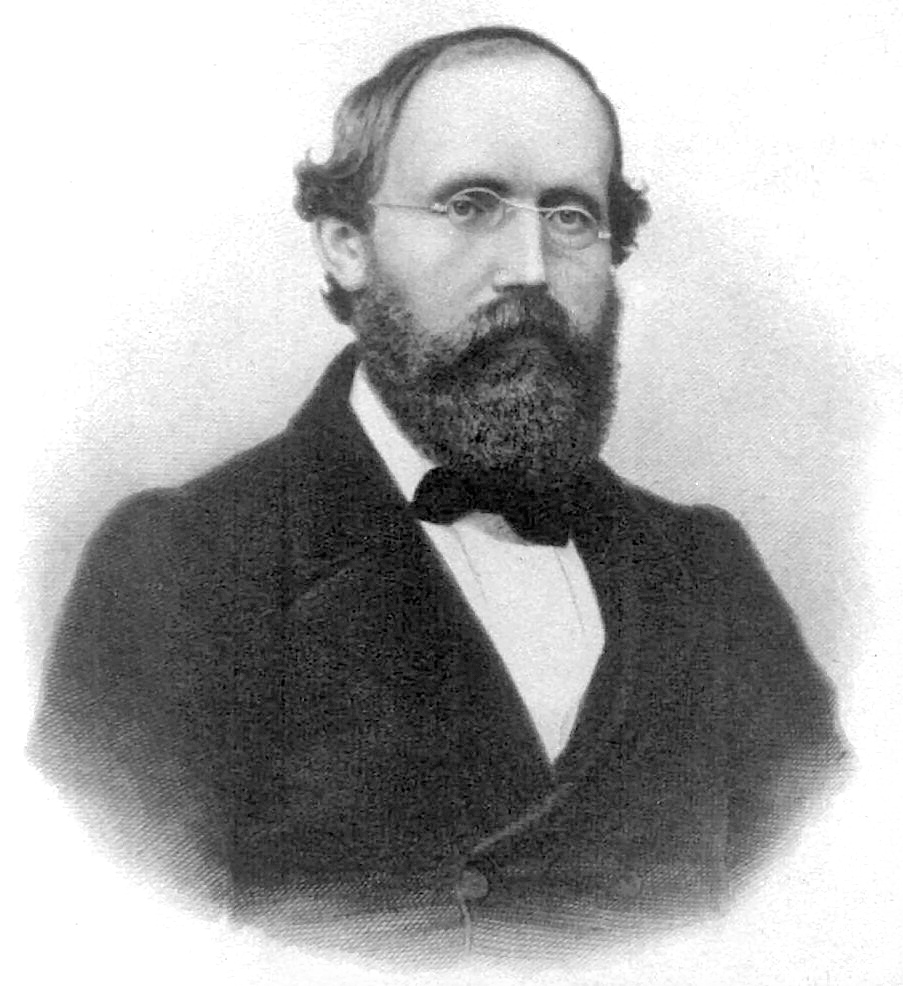
2.The Riemann Hypothesis9123 votes
One of the most famous unsolved problems in mathematics, the Riemann Hypothesis conjectures that all non-trivial zeros of the Riemann zeta function lie on a critical line in the complex plane. Its resolution would have profound implications for number theory, particularly in the distribution of prime numbers.
💡 Part of the Clay Mathematics Institute's Millennium Prize Problems, with a $1 million prize for a correct proof.

3.Yang-Mills Existence and Mass Gap8425 votes
This problem revolves around the mathematical formulation of quantum field theory and seeks to establish the existence of a quantum field theory for Yang-Mills fields. Specifically, it aims to prove that there is a mass gap between the ground state and the first excited state in a non-abelian gauge theory.
💡 It is one of the seven Millennium Prize Problems, which offer a $1,000,000 reward for a correct solution.

4.The Continuum Hypothesis8126 votes
The Continuum Hypothesis is a proposition about the possible sizes of infinite sets, specifically whether there is a set whose size is strictly between that of the integers and the real numbers. Gödel and Cohen showed that it can neither be proved nor disproved using the standard axioms of set theory.
💡 The hypothesis was the first on David Hilbert's famous list of 23 unsolved problems in mathematics, presented in 1900.

5.Hodge Conjecture8050 votes
The Hodge Conjecture is a major unsolved problem in algebraic geometry that relates algebraic cycles to cohomology classes. Specifically, it proposes that certain classes of cohomology are algebraic, which has deep implications in the field.
💡 The conjecture was first proposed by W.V.D. Hodge in the 1950s.

6.Birch and Swinnerton-Dyer Conjecture7753 votes
This conjecture is about the number of rational solutions of equations defining elliptic curves and connects deep aspects of number theory and algebraic geometry. It proposes a specific relationship between the rank of an elliptic curve and the behavior of its L-function at a particular point.
💡 Like the Yang-Mills problem, it is also one of the Millennium Prize Problems.
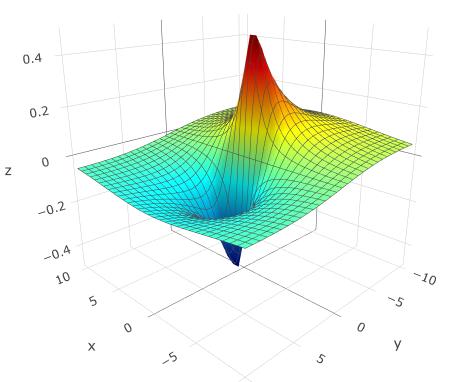
7.The Existence of a Solution for the Yang-Mills Equations7616 votes
The Yang-Mills Equations are fundamental equations in theoretical physics that describe the behavior of non-abelian gauge fields. The existence and mass gap of a quantum field theory defined by these equations have not been rigorously proven.
💡 This is also one of the Millennium Prize Problems, with significant implications for particle physics.

8.Navier-Stokes Equations6407 votes
The Navier-Stokes equations describe the motion of fluid substances such as liquids and gases, but proving the existence and smoothness of solutions in three dimensions remains an open problem in mathematics. It has significant implications in physics, engineering, and meteorology.
💡 Also one of the Millennium Prize Problems, with a $1,000,000 reward for a solution.

9.P vs NP Problem6189 votes
The P vs NP problem asks whether every problem whose solution can be quickly verified can also be quickly solved. This foundational question in computer science has implications for fields ranging from cryptography to optimization.
💡 Also part of the Millennium Prize Problems, addressing its solution could revolutionize computing and problem-solving processes.

10.Collatz Conjecture5627 votes
The Collatz conjecture is a simple-to-state yet unsolved problem in mathematics that starts with any positive integer and follows specific rules, ultimately conjecturing that this process will always reach the number one. Although it appears elementary, it has yet to be proven true or false for all integers.
💡 Despite being a straightforward sequence, it has baffled mathematicians for decades without a resolution.

11.The Twin Prime Conjecture5418 votes
The Twin Prime Conjecture suggests that there are infinitely many pairs of prime numbers that have a difference of two. This conjecture has intrigued mathematicians for centuries, yet a proof remains elusive.
💡 Proposed in 1846, this conjecture is closely related to the distribution of prime numbers.

12.The Navier-Stokes Existence and Smoothness5087 votes
This problem concerns the mathematical equations that describe the motion of viscous fluid substances, questioning the existence and smoothness of solutions in three dimensions. Providing clarity on this issue could enhance our understanding of fluid dynamics and its applications in various scientific fields.
💡 Identified as one of the Millennium Prize Problems, successful resolution is critical for fields like meteorology, oceanography, and engineering.

13.The Unknotting Problem3588 votes
The Unknotting Problem asks whether a given knot can be untangled into a simple loop without cutting the string. While many are known to be unknots, the general case remains a challenging question in topology.
💡 It is a classic problem in mathematical knot theory, with applications in biology and computer science.


