Explore the enigmatic patterns found throughout the natural world, revealing an intricate interplay between form, function, and aesthetics. From the spirals of a shell to the symmetry of leaves, these patterns provide insight into the underlying principles of life and ecosystem dynamics.
1.Fibonacci Sequence in Nature16612 votes
The Fibonacci sequence manifests in various natural structures, from the arrangement of leaves on a stem to the patterns of seeds in a sunflower. This mathematical concept illustrates the beauty and efficiency of growth patterns found across different species, signifying a deeper connection between nature and mathematics.
💡 The Fibonacci sequence is also closely related to the golden ratio, which has been a source of fascination in art, architecture, and nature.

2.Golden Ratio13863 votes
The Golden Ratio, approximately 1.618, is a mathematical ratio that frequently appears in nature, art, and architecture. It is believed to create aesthetically pleasing compositions, and many natural patterns, such as the arrangement of leaves and flowers, exhibit this ratio.
💡 The Golden Ratio is often referred to as 'divine proportion' due to its frequent appearance in nature and the human form.

3.Spiral Galaxy Formation11675 votes
Spiral galaxies, such as the Milky Way, exhibit beautiful, mysterious patterns formed by the gravitational interactions of stars and gas. These galactic structures are not only stunning but also offer insights into the evolution and dynamics of the universe.
💡 The shape and formation of spiral galaxies can help astronomers understand the distribution of dark matter in the universe.

4.Fractals in Nature10921 votes
Fractals are intricate structures displaying self-similarity across different scales and can be observed in natural phenomena such as coastlines, snowflakes, and clouds. These patterns exemplify complexity arising from simple iterative processes, illustrating how chaos theory intertwines with the organization seen in the natural world.
💡 The term 'fractal' was coined by mathematician Benoît Mandelbrot in 1975, revolutionizing the study of complex structures.

5.Dendritic Patterns10589 votes
Dendritic patterns are tree-like structures that form naturally in various contexts, including rivers, frost, and crystals. These patterns arise from the processes of diffusion-limited aggregation and can be found in organic growth as well as in stones and minerals.
💡 Dendritic growth can be observed in many scientific fields, from biology to materials science.

6.Waves and Ripples9488 votes
In nature, waves and ripples can be seen in water, sound, and light, creating complex patterns that can be both beautiful and mesmerizing. These natural patterns are often studied in physics to understand wave behavior and its applications.
💡 Ripples in water can help scientists study other phenomena, such as seismic waves or even the properties of light.
7.Tessellations in Nature9416 votes
Tessellations, or patterns of shapes that fit together without gaps, can be found in nature through honeycomb structures, reptile scales, and leaf patterns. These configurations demonstrate efficiency in packing and provide insight into evolutionary adaptations that optimize resources and space utilization.
💡 The concept of tessellation is used in various fields, including art, mathematics, and architecture, representing a significant mathematical and aesthetic principle.
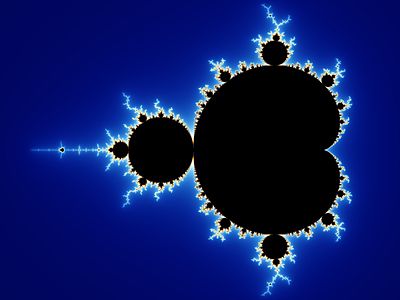
8.Mandelbrot Set8673 votes
The Mandelbrot set is a famous fractal defined in complex numbers, showcasing intricate and infinitely complex patterns. It demonstrates how simple mathematical formulas can create astonishingly complex structures, reflecting the beauty of mathematics in nature.
💡 The Mandelbrot set has become a popular visual attraction and is often referred to as a 'poster child' for fractal geometry.
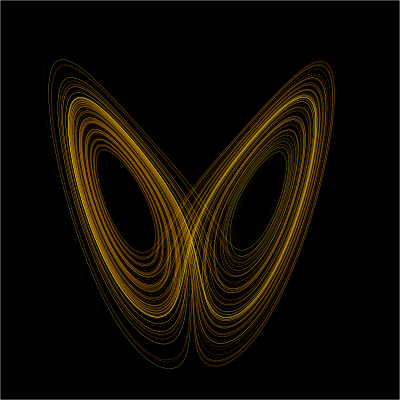
9.Chaos Theory8620 votes
Chaos theory studies the behavior of dynamic systems that are highly sensitive to initial conditions, often referred to as the 'butterfly effect.' This concept illustrates how small changes in a system can lead to vastly different outcomes, found in phenomena from weather patterns to population dynamics.
💡 Chaos theory has applications in various fields including mathematics, physics, economics, and biology.

10.Crystal Formation8090 votes
Crystal formation is the process where atoms or molecules arrange themselves into a structured pattern, usually resulting in a solid with a unique shape. This natural formation can be seen in minerals and ice, showcasing geometry in nature.
💡 Crystals can form in various environments, depending on temperature, pressure, and chemical composition.

11.Pareidolia6438 votes
Pareidolia is the tendency of the human mind to perceive familiar patterns, such as faces, in random stimuli. This phenomenon explains why people often see shapes in clouds or faces in inanimate objects.
💡 Pareidolia is a psychological phenomenon and occurs due to the brain's desire to interpret complex stimuli into familiar patterns.

12.Symmetry in Nature6381 votes
Symmetry refers to a balance that can be found in various aspects of nature, from the arrangement of leaves on a stem to the shapes of animals. It plays a significant role in biology and is often associated with beauty and fitness in evolutionary terms.
💡 Many species exhibit bilateral symmetry, where their left and right sides are mirror images, while others may show radial symmetry, particularly in marine life.
13.Snowflake Formation5832 votes
Snowflakes form through a complex combination of temperature and humidity conditions, resulting in an astonishing variety of unique, intricate patterns. Each snowflake is a crystalline representation of nature's intricate symmetry and complexity.
💡 No two snowflakes are alike; each one has a unique structure due to the different environmental conditions during its formation.
14.Hexagonal Patterns in Honeycombs5792 votes
Honeybees create hexagonal patterns in their hives, a structure that efficiently uses space and resources. These patterns are not only aesthetically pleasing but also provide remarkable strength and stability.
💡 The honeycomb is one of the most efficient structures known, with minimal material used to hold the maximum weight.
15.Natural Stone Formations5688 votes
Natural stone formations, such as hoodoos, arches, and stone circles, are created through geological processes like erosion and sedimentation over thousands of years. They demonstrate the Earth's evolving landscape and often reflect unique environmental conditions.
💡 Some formations, like Stonehenge, have significant historical and cultural value beyond their natural beauty.


