Mathematics is a realm filled with deep mysteries, and several unsolved problems stand as monumental challenges for researchers and enthusiasts alike. These problems not only inspire mathematical inquiry but also hold the potential for groundbreaking discoveries that could reshape our understanding of the field.

1.Riemann Hypothesis21332 votes
The Riemann Hypothesis is a conjecture about the distribution of the zeros of the Riemann zeta function, and it is regarded as one of the most important unsolved problems in mathematics. Its resolution has profound implications for number theory and the understanding of prime numbers.
💡 One of the Clay Millennium Prize Problems, offering a reward of one million dollars for a correct proof.

2.P vs NP Problem18950 votes
The P vs NP Problem addresses the question of whether every problem whose solution can be verified quickly can also be solved quickly, posing a fundamental question in computer science and mathematics. Its resolution could transform fields such as cryptography and optimization.
💡 Also classified as one of the Millennium Prize Problems, offering a million-dollar reward for a solution.

3.Navier-Stokes Existence and Smoothness15809 votes
This problem seeks to determine whether solutions to the Navier-Stokes equations, which describe the motion of fluid substances, exist under all scenarios and are smooth. Its solution is crucial for understanding turbulence and has significant implications in physical sciences and engineering.
💡 It is another Clay Millennium Prize Problem, with a million-dollar bounty for a correct solution.

4.Poincaré Conjecture9432 votes
The Poincaré Conjecture concerns the characterization of three-dimensional spheres and was famously proven by Grigori Perelman in 2003. Although Perelman solved the conjecture, the nature of the proof and its implications continue to be studied.
💡 Perelman's proof is considered one of the most important achievements in mathematics, but he declined the Millennium Prize.

5.Incomplete Arithmetic8647 votes
Gödel's Incompleteness Theorems assert that in any consistent formal system, there are propositions that cannot be proven or disproven within the system. This fundamentally changed the understanding of the limits of provability in mathematics.
💡 Gödel received the National Medal of Science for his work, which has implications in computer science and philosophy.

6.The Continuum Hypothesis7107 votes
The Continuum Hypothesis posits that there is no set whose size is strictly between that of the integers and the real numbers. It was the first on David Hilbert's list of 23 unsolved problems presented in 1900, and it has profound implications for set theory.
💡 In 1963, Paul Cohen showed that the hypothesis can neither be proven nor disproven using standard set theory axioms.

7.Fermat's Last Theorem5441 votes
Fermat's Last Theorem states that there are no three positive integers a, b, and c that satisfy the equation a^n + b^n = c^n for any integer value of n greater than 2. This theorem remained unproven for over 350 years until Andrew Wiles finally proved it in 1994.
💡 Wiles's proof is over 100 pages long and combines techniques from various fields of mathematics.

8.Collatz Conjecture4703 votes
The Collatz Conjecture posits that starting with any positive integer and following a specific sequence of operations will always eventually arrive at the number 1. Despite its simplicity, no one has been able to prove it universally for all integers.
💡 Also known as the 3n + 1 problem, it has puzzled mathematicians since it was introduced in 1937.

9.Twin Prime Conjecture3990 votes
The Twin Prime Conjecture asserts that there are infinitely many pairs of prime numbers that have a difference of two, such as (3, 5) or (11, 13). Despite significant numerical evidence supporting this conjecture, it remains unproven.
💡 The conjecture was formulated in the 19th century and is still a key area of research in number theory.
10.The Goldbach Conjecture3787 votes
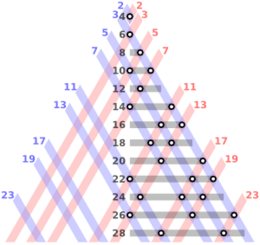
The Goldbach Conjecture posits that every even integer greater than 2 can be expressed as the sum of two prime numbers. This conjecture has been tested for large numbers but remains unproven.
💡 Goldbach's Conjecture is one of the oldest unsolved problems in number theory.

11.Hadamard Conjecture3315 votes
The Hadamard Conjecture proposes bounds on the growth of entire functions, specifically concerning the number of zeros they possess. It remains an open question in the realm of complex analysis.
💡 Hadamard made significant contributions to various fields, including mathematics and physics.
12.Hilbert's Tenth Problem3221 votes
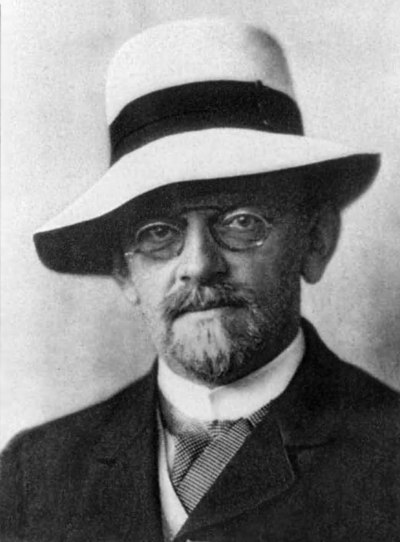
This problem asks for an algorithm to determine whether a given Diophantine equation has an integer solution. It was proven undecidable, meaning no such algorithm exists.
💡 Hilbert's work led to significant advancements in number theory and computability.
13.The Incomplete Arithmetic Conjecture3030 votes
The Incomplete Arithmetic states that there are propositions in arithmetic that cannot be proven or disproven based on the axioms of arithmetic. This was a central discovery by Kurt Gödel, fundamentally altering the landscape of mathematical logic.
💡 Gödel's work established limits on provability in formal mathematical systems.

14.The abc Conjecture2416 votes
The abc Conjecture describes a surprising relationship between the prime factors of three integers a, b, and c, which satisfy a + b = c. It suggests that the product of the distinct prime factors of a, b, and c is rarely much smaller than c itself.
💡 This conjecture has important implications for various other problems in number theory.

15.The Yang-Mills Conjecture2153 votes
The Yang-Mills Conjecture concerns quantum field theory and asserts the existence of a quantum field theory for the Yang-Mills equations in four-dimensional space. While the classical equations are well understood, the quantum case remains unsolved.
💡 The conjecture is one of the seven Millennium Prize Problems.


