This list highlights some of the most groundbreaking scientific discoveries that have significantly advanced human understanding of the universe and life. These discoveries span various fields and have shaped modern science and technology.
1.Hubble's Law and Expanding Universe1021 votes
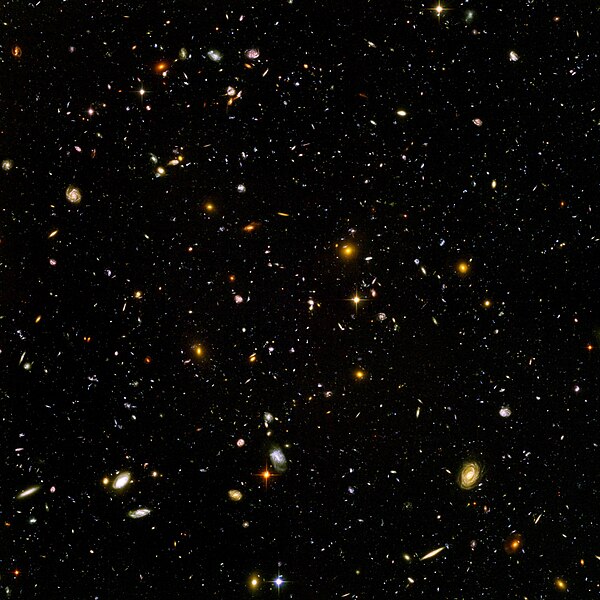
Formulated by Edwin Hubble in the late 1920s, this discovery established that galaxies are receding from each other, indicating that the universe is expanding. It provided key evidence for the Big Bang theory and cosmological models.
💡 Hubble's observations in 1929; led to the formulation of Hubble's Law.

2.Neurons Discovery Sequence1012 votes
Santiago Ramón y Cajal's detailed illustrations of nerve cells in the late 19th century established that neurons are discrete entities and laid groundwork for neuroscience.

3.CRISPR-Cas9913 votes
A revolutionary gene-editing technology developed in 2012, enabling precise modifications to DNA in living organisms, with vast implications for medicine and agriculture.
💡 Developed by Jennifer Doudna and Emmanuelle Charpentier, awarded the Nobel Prize in Chemistry in 2020

4.Penicillin892 votes
Discovered by Alexander Fleming in 1928, penicillin was the first true antibiotic and revolutionized medicine by saving countless lives from bacterial infections.
💡 First antibiotic drug, Nobel Prize in Physiology or Medicine in 1945

5.Theory of General Relativity791 votes
Proposed by Albert Einstein in 1915, this theory revolutionized our understanding of gravity, describing it as a curvature of spacetime caused by mass and energy. It has been confirmed through numerous experiments and observations, fundamentally altering physics.
💡 Published in 1915; confirmed by Eddington's 1919 solar eclipse expedition.

6.Bell Labs Transistor692 votes
Invented in 1947 at Bell Labs by William Shockley, John Bardeen, and Walter Brattain, the transistor revolutionized electronics and led to modern computing.
💡 First practical transistor, Nobel Prize in Physics in 1956

7.DNA Double Helix Structure585 votes
Discovered by James Watson and Francis Crick in 1953, the double helix model revealed the molecular structure of DNA, elucidating how genetic information is stored and replicated. This discovery laid the foundation for modern genetics and biotechnology.
💡 Identified in 1953; Nobel Prize awarded in 1962.
8.Lunar Water Discovery578 votes
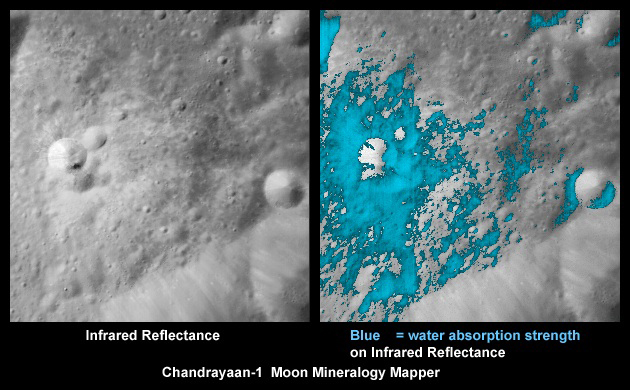
"Lunar water" was confirmed by NASA's Lunar Reconnaissance Orbiter and Chandrayaan-1 missions during the early 2000s, revealing significant amounts of ice near the Moon's poles.

9.Michelson-Morley Experiment576 votes
Conducted in 1887 by Albert A. Michelson and Edward Morley, it provided crucial evidence against the existence of a luminiferous ether, impacting Einstein's development of special relativity.
💡 Failed to detect ether wind; challenged classical physics

10.Plate Tectonics498 votes
A unifying theory explaining Earth's lithosphere as divided into moving plates that cause earthquakes, volcanoes, and continental drift, gaining acceptance in the 1960s.
💡 Provided explanation for continental drift, confirmed by seafloor spreading studies

11.Quantum Mechanics483 votes
A fundamental theory in physics describing the behavior of matter and energy on atomic and subatomic scales, developed primarily in the early 20th century.
💡 Developed by Max Planck, Niels Bohr, Werner Heisenberg, and others between 1900–1930

12.Higgs Boson238 votes
Predicted in the 1960s and discovered in 2012 at CERN's Large Hadron Collider, it explains why particles have mass via the Higgs field.
💡 Confirmed detection announced in 2012, Nobel Prize awarded to Peter Higgs and François Englert in 2013
13.Missing Link Fossil (Archaeopteryx)171 votes
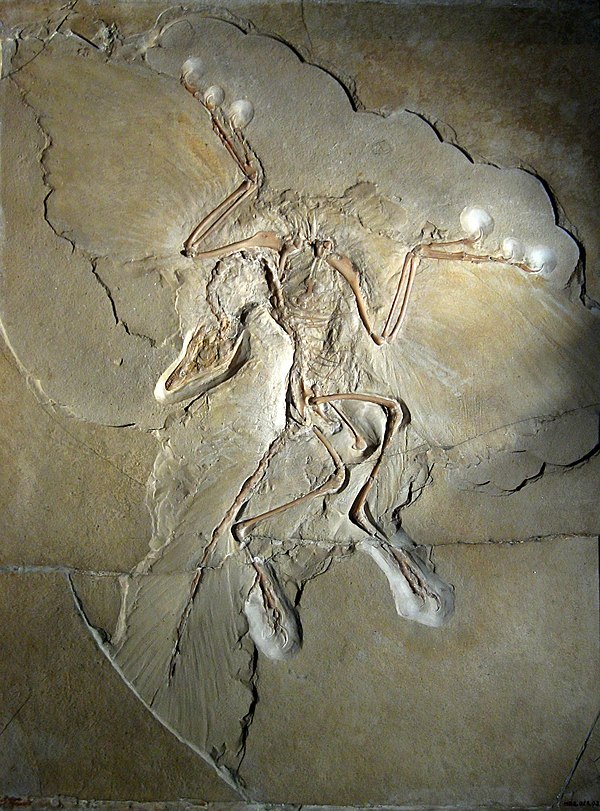
"Archaeopteryx" fossils discovered in 1861 are among the earliest known birds exhibiting both avian and reptilian traits, supporting evolutionary theory.


